


Written by Mo Kahn on
December 10, 2025


The global artificial intelligence market has reached $1.8 trillion in 2025, fundamentally transforming how we visualize and represent technology in our digital communications. When we think about the picture on artificial intelligence, we’re considering both the literal images that represent AI concepts and the broader visual landscape of how this technology appears in media, marketing, and professional content.
Finding the right AI imagery has become crucial for businesses, educators, marketers, and content creators who need to communicate complex technological concepts through visual storytelling. Whether you’re creating presentations about machine learning, designing websites for tech startups, or illustrating articles about automation, understanding how to source, license, and optimize AI pictures can significantly impact your project’s success.
This comprehensive guide covers everything from identifying the most effective types of AI imagery to navigating licensing requirements, exploring top stock photo platforms, and even creating custom AI-generated content. You’ll discover practical strategies for finding high-quality visuals that accurately represent artificial intelligence concepts while meeting your specific technical and legal requirements.
Understanding the different categories of AI imagery helps you select visuals that accurately represent your intended message and resonate with your target audience.
Robot and humanoid imagery remains the most recognizable visual metaphor for artificial intelligence. These beelden range from sleek, modern android designs to industrial robotic arms and futuristic humanoid figures. Effective robot imagery typically features clean lines, metallic surfaces, and LED lighting elements that suggest advanced technology.
Modern representations often blend human and mechanical elements, showing partially transparent figures with visible circuitry or digital overlays. These images work particularly well for general AI concepts, customer service automation, and discussions about human-machine collaboration.

Neural network diagrams and interconnected node patterns provide a more technical representation of how AI systems actually function. These visualizations typically show colored circles or spheres connected by lines, representing neurons and synapses in artificial neural networks.
Effective neural network imagery uses color coding to differentiate between input layers, hidden layers, and output layers. Dynamic versions might include animated particles or data flowing through connections, making abstract concepts more tangible for viewers.
Brain-computer interface visuals combine human neurological elements with technological components, often showing digital overlays on brain scans or circuit patterns integrated with neural structures. These images effectively communicate concepts related to cognitive computing, machine learning that mimics human thought processes, and AI systems that enhance human intelligence.
Holographic displays, floating interfaces, and immersive digital environments represent the potential future applications of artificial intelligence. These scenes often feature people interacting with transparent screens, gesture-controlled interfaces, or augmented reality elements overlaid on real-world environments.
Technical diagrams showing algorithm workflows, data processing pipelines, and statistical analysis provide educational value for more sophisticated audiences. These images typically include flowcharts, mathematical formulas, and data visualization elements like graphs and charts.
VR and AR imagery showcases AI applications in immersive technologies, featuring people wearing headsets, digital objects integrated into real environments, and 360-degree virtual spaces. These visuals work well for content about AI in gaming, training simulations, and interactive experiences.
Selecting the right stock photo platform significantly impacts both the quality of available imagery and your project’s budget. Each platform offers distinct advantages for different types of AI-related visual content.
Getty Images leads in premium quality with 161,838 high-resolution AI stock photos. Their collection emphasizes editorial and commercial-grade imagery with exceptional technical quality and diverse representation. Getty’s AI content includes both conceptual imagery and real-world applications across industries.
Pricing: Individual images range from $175-$499, with subscription plans starting at $199/month for 10 images.
Licensing: Standard and enhanced licenses available, with clear commercial usage rights and indemnification protection.
As Getty’s more accessible platform, iStock provides 489,493 royalty-free AI images with flexible licensing options. Their collection balances quality with affordability, making it ideal for small businesses and independent creators.
Pricing: Credit packages start at $12 per image, with monthly subscriptions from $29 for 10 downloads.
Licensing: Standard and extended licenses, with extended required for products for resale or wide distribution.
Shutterstock’s vast collection features over 34 million AI-related visuals including videos and vectors. Their platform excels in variety and search functionality, with advanced filters that help locate specific styles and concepts quickly.
Pricing: Monthly plans start at $29 for 10 images, with annual subscriptions offering better value at $199/year for 120 images.
Licensing: Standard license covers most commercial uses, with enhanced license available for extended distribution.

Adobe Stock delivers professional AI imagery with seamless Creative Cloud integration, allowing direct licensing from within Photoshop, Illustrator, and other Adobe applications. Their AI collection focuses on high-quality conceptual imagery and technical illustrations.
Pricing: Individual images from $9.99, with Creative Cloud subscribers receiving 10 free images monthly.
Licensing: Standard and extended licenses, with clear guidelines for commercial and editorial use.
Effective search strategies can dramatically reduce the time spent finding appropriate AI imagery while improving the quality and relevance of your results.
Start with specific, technical terms rather than generic “artificial intelligence” searches. Use keywords like “machine learning algorithms,” “neural networks,” “robotics automation,” and “predictive analytics” to find more targeted results. Combine technical terms with industry applications: “healthcare AI diagnostics” or “financial technology algorithms.”
Platform-specific filters enhance search effectiveness significantly. Most platforms allow you to sort by popularity, recency, or relevance, with popularity often yielding the most polished, professional imagery.
Set minimum resolution requirements before searching. For print applications, filter for images with at least 300 DPI and dimensions of 3000x2000 pixels. Web applications typically require 1920x1080 pixels for headers and banners, while social media posts perform best at 1080x1080 pixels.
Apply category filters for “technology,” “science,” and “business” to narrow results to professional contexts. Most platforms also offer color filters, which help maintain visual consistency across your project.
Use reverse image search when you find a style you like but need higher resolution or different licensing terms. Upload your preferred image to Google Images or TinEye to locate alternative versions or similar compositions.
Boolean search operators improve precision on platforms that support them. Use quotation marks for exact phrases (“machine learning”) and minus signs to exclude unwanted terms (“artificial intelligence” -robot).
Monitor monthly trending terms on major platforms to discover newly popular AI concepts and visual styles. Current trending terms include “generative AI,” “large language models,” “autonomous systems,” and “computer vision.”
Platform analytics often reveal seasonal trends in AI imagery demand, with technology conferences and product launches creating spikes in specific visual themes.
Understanding licensing terms prevents legal complications and ensures appropriate usage of AI imagery across different applications and media.
Royalty-free licenses allow unlimited use after a one-time purchase, making them ideal for ongoing marketing campaigns or evergreen content. These licenses typically permit commercial use, modification, and distribution without additional fees.
However, royalty-free doesn’t mean copyright-free. The original creator retains copyright, and some usage restrictions may apply, particularly regarding resale of unmodified images or use in competing stock photo services.
Rights-managed licensing provides exclusive or semi-exclusive usage within defined parameters. These licenses specify usage duration, geographic distribution, print run quantities, and industry exclusivity. While more expensive, rights-managed licensing ensures your AI imagery won’t appear in competitor materials.
This licensing model works best for major advertising campaigns, book publishing, or situations requiring visual exclusivity within your market segment.
Creative Commons AI images require proper attribution but often allow commercial use and modification. Standard attribution includes the creator’s name, source platform, and license type. Some Creative Commons licenses prohibit commercial use or require derivative works to use the same license.
Always verify specific Creative Commons terms, as requirements vary significantly between CC0 (public domain), CC BY (attribution only), and more restrictive variants.
Maintain detailed records of image licenses, including purchase dates, license terms, and usage limitations. Download and save license agreements, as terms may change over time. For team projects, create shared documentation specifying approved usage for each licensed image.
Consider purchasing extended or enhanced licenses for images that will receive wide distribution or long-term use, as standard licenses often include usage limitations that may affect scaling projects.
Technical specifications ensure your AI imagery reproduces correctly across different media and maintains professional quality standards.
Professional print applications require minimum 300 DPI resolution with CMYK color space conversion. For AI imagery in brochures, posters, or magazine layouts, source images should be at least 3000x2000 pixels to allow for cropping and scaling without quality degradation.
Large format prints, such as trade show displays or billboards, may require even higher resolutions. Calculate final print size multiplied by 300 DPI to determine minimum pixel dimensions needed.
Website headers and hero images perform best at 1920x1080 pixels or higher, with file sizes optimized for fast loading. Use JPEG format for photographic AI imagery and PNG for graphics with transparent backgrounds or sharp edges.
Mobile optimization requires additional consideration, as many users will view AI imagery on smartphones. Ensure important visual elements remain clear when scaled down to 375px width (iPhone standard).
Different platforms require specific aspect ratios and dimensions for optimal display:
Vector formats (SVG, AI, EPS) provide infinite scalability for logos, icons, and simple AI illustrations. These formats work particularly well for neural network diagrams, flowcharts, and technical illustrations that may need to appear at various sizes across different materials.
Vector AI imagery also allows easy color customization to match brand guidelines without quality loss.
RGB color space serves digital applications (websites, presentations, social media), while CMYK conversion is necessary for print applications. Some vibrant colors visible in RGB cannot be accurately reproduced in CMYK, potentially affecting the impact of colorful AI visualizations.
Request or create CMYK versions of critical AI imagery before print deadlines to avoid last-minute color disappointments.
Understanding current trends in AI imagery helps you select visuals that resonate with contemporary audiences and accurately represent evolving technology applications.
Healthcare AI imagery has become increasingly sophisticated, reflecting real-world implementations like the 223 AI-enabled medical devices approved by the FDA by 2023. Effective healthcare AI visuals show medical professionals using tablet interfaces, AI-enhanced diagnostic displays, and robotic surgical equipment.
Popular themes include radiologists reviewing AI-highlighted scans, predictive health monitoring interfaces, and telemedicine platforms with AI-powered diagnostic suggestions. These images should balance technological advancement with human expertise and patient care.
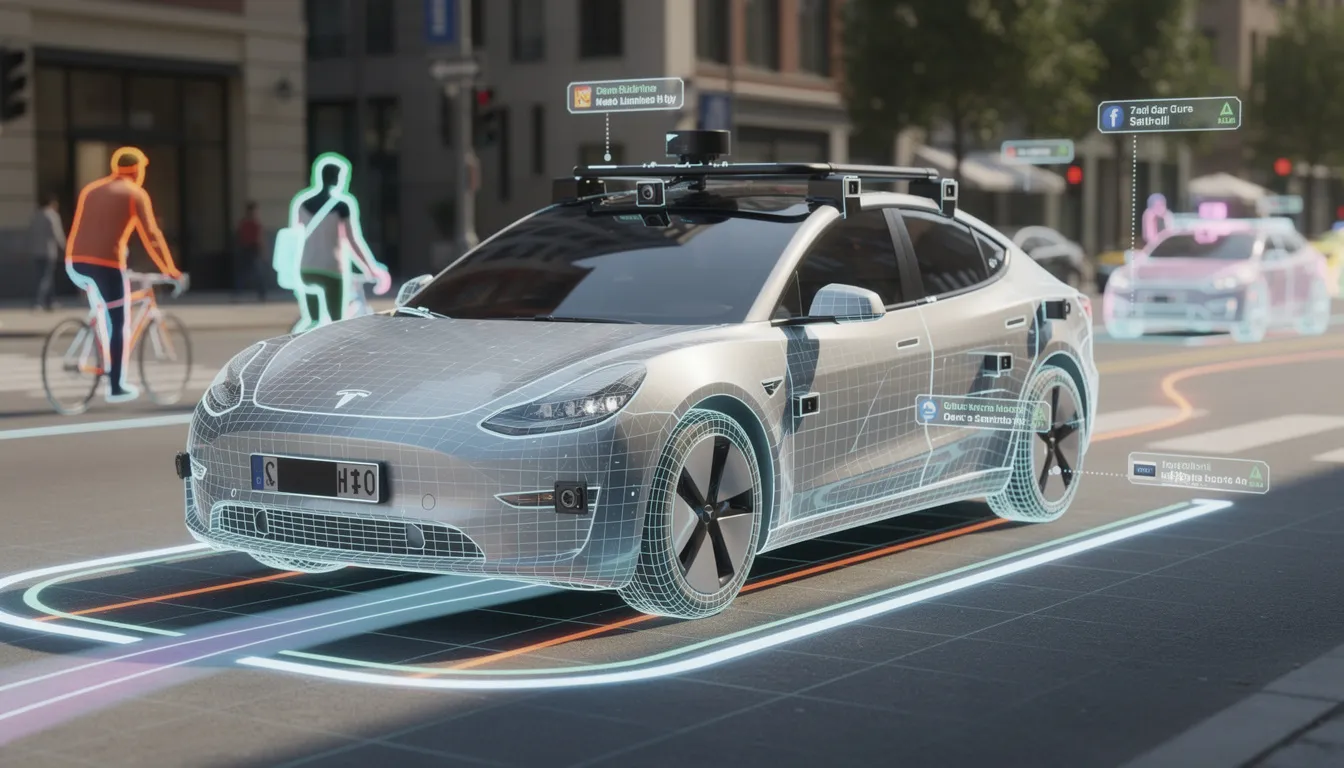
Automotive AI imagery reflects rapid industry progress, with companies like Waymo providing over 150,000 autonomous rides weekly in U.S. cities. Effective transportation AI visuals feature sensor arrays on vehicles, heads-up displays showing AI decision-making, and traffic flow optimization systems.
Modern automotive AI imagery increasingly shows real-world deployment rather than futuristic concepts, including delivery robots, smart traffic management systems, and vehicle-to-infrastructure communication.
Financial AI imagery encompasses algorithmic trading interfaces, fraud detection systems, and robo-advisor platforms. Effective visuals show real-time data analysis, predictive modeling interfaces, and AI-enhanced customer service platforms.
Popular themes include blockchain visualization, risk assessment dashboards, and automated investment portfolio management. These images should convey security, sophistication, and data-driven decision making.
Smart home AI imagery shows interconnected devices, voice assistants, and automated home management systems. Effective visuals demonstrate AI coordinating multiple systems—lighting, security, climate control, and entertainment—through centralized or distributed intelligence.
Contemporary smart home imagery emphasizes seamless integration and user experience rather than obvious technology displays.
Industrial AI imagery features robotic assembly lines, predictive maintenance interfaces, and quality control systems. These visuals should show AI enhancing rather than replacing human expertise, with collaborative robotics and AI-guided decision support.
Popular themes include sensor data visualization, predictive analytics dashboards, and AI-optimized supply chain management.
Educational AI imagery shows adaptive learning platforms, AI tutoring systems, and personalized curriculum interfaces. These visuals should emphasize student engagement and learning outcomes rather than technology for its own sake.
Effective educational AI imagery includes diverse student populations and various learning environments, from traditional classrooms to remote learning setups.
Custom AI-generated imagery offers unique advantages for brands requiring original visuals or specific concepts not available through traditional stock photography.
DALL-E 3 excels at creating unique AI artwork from natural language prompts, offering unprecedented control over style, composition, and content. Professional applications include creating original illustrations for presentations, generating concept art for product development, and producing branded imagery that aligns with specific visual guidelines.
Effective prompting strategies include specifying style preferences (“photorealistic,” “minimalist illustration,” “technical diagram”), composition details (“close-up,” “wide shot,” “isometric view”), and lighting conditions. More detailed prompts generally produce more accurate results.
Midjourney specializes in high-quality artistic interpretations of AI concepts, particularly excelling at creating stylized, visually striking imagery. The platform works well for creating hero images, artistic backgrounds, and conceptual illustrations that require strong aesthetic appeal.
Midjourney’s strength lies in its ability to blend artistic styles with technical subject matter, creating AI imagery that feels both accurate and visually compelling.
As an open-source solution, Stable Diffusion offers maximum customization and control over the generation process. Professional users can train custom models on specific datasets, ensuring generated imagery aligns precisely with brand guidelines and technical requirements.
This platform works best for organizations with technical expertise and specific customization needs that commercial platforms cannot address.
Adobe Firefly integrates AI generation directly into Creative Cloud workflows, allowing seamless creation and editing within familiar professional tools. This integration enables rapid iteration and refinement of AI imagery within existing design processes.
Firefly excels at creating imagery that requires further editing or integration with other design elements, as generated images can be immediately modified using professional design tools.
AI-generated imagery presents unique copyright considerations, as traditional copyright law assumes human creators. Most AI generation platforms grant commercial usage rights to subscribers, but terms vary significantly between services.
Important considerations include:
Effective prompt engineering significantly improves AI-generated image quality and relevance. Structure prompts with subject description, style specification, composition details, and quality modifiers.
Example structure: “A [subject] in [style] showing [specific details], [composition], [lighting], high quality, professional photography”
Iterate on prompts systematically, testing variations in wording, style specifications, and detail levels to achieve desired results consistently.
While stock platforms are great for sourcing existing visuals, many teams now prefer custom AI-generated images tailored exactly to their project. This is where starryai becomes a strong alternative to traditional stock photos.
starryai lets you generate high quality AI images using simple text prompts, making it ideal for brands, educators, marketers, and creators who need visuals that don’t exist in any stock library.
✔ Unlimited creative flexibility – Generate images that match precise themes like robotics, neural networks, smart cities, or futuristic workspaces.
✔ Unique visuals every time – No risk of using the same stock photo competitors use.
✔ High resolution outputs – Great for presentations, websites, social media, and print.
✔ Fast iteration – Produce multiple styles and variations in seconds.
✔ Cost-effective – Often more affordable than licensing multiple premium stock photos.
Use starryai when you need:
• visuals representing abstract AI concepts
• images showing futuristic interfaces or machine learning processes
• consistent themes across an entire campaign
• imagery with brand-specific colors, moods, or styles
• unique, copyright-clear artwork that you control
Because AI evolves rapidly, starryai helps you stay visually current while producing assets that feel fresh and aligned with today’s tech landscape.
The picture on artificial intelligence continues evolving as rapidly as the technology itself, requiring content creators to stay current with visual trends, platform capabilities, and licensing requirements. Whether sourcing from established stock photo platforms or creating custom AI-generated imagery, success depends on understanding your specific requirements, target audience, and technical constraints.
The most effective AI imagery strategy combines multiple approaches: using premium stock photography for high-impact applications, free platforms for budget-conscious projects, and custom generation for unique brand requirements. As AI technology advances and becomes more integrated into daily life, visual representations must balance technical accuracy with emotional resonance, helping audiences understand complex concepts through compelling imagery.
Start by evaluating your current AI imagery needs, exploring the platforms and strategies outlined in this guide, and experimenting with both traditional stock photography and emerging AI generation tools. The investment in high-quality AI imagery pays dividends in audience engagement, professional credibility, and effective communication of sophisticated technological concepts.





.svg)