


Written by Mo Kahn on
December 2, 2025


The Art Deco movement, also known as Art Deco, was one of the most recognizable visual languages of the 20th century. It blended modern design, industrial arts, and decorative arts into something bold, glamorous, and unapologetically modern. Sleek metallic finishes, geometric forms, simple geometric patterns, and exotic materials defined the style, turning everyday objects into luxury.
In art history, Art Deco stands out as a significant architectural style and design style, influencing buildings, interiors, and objects worldwide.
Emerging after World War I, Art Deco represented optimism and progress during a world desperate for something new. Rooted in modernist movements and modern ideas, it reflected the spirit of contemporary life in the early 20th century. It became a global visual identity across architecture, interior design, graphic design, painting, sculpture, and industrial design. From skyscrapers to jewelry boxes, the Art Deco movement shaped modern taste permanently.
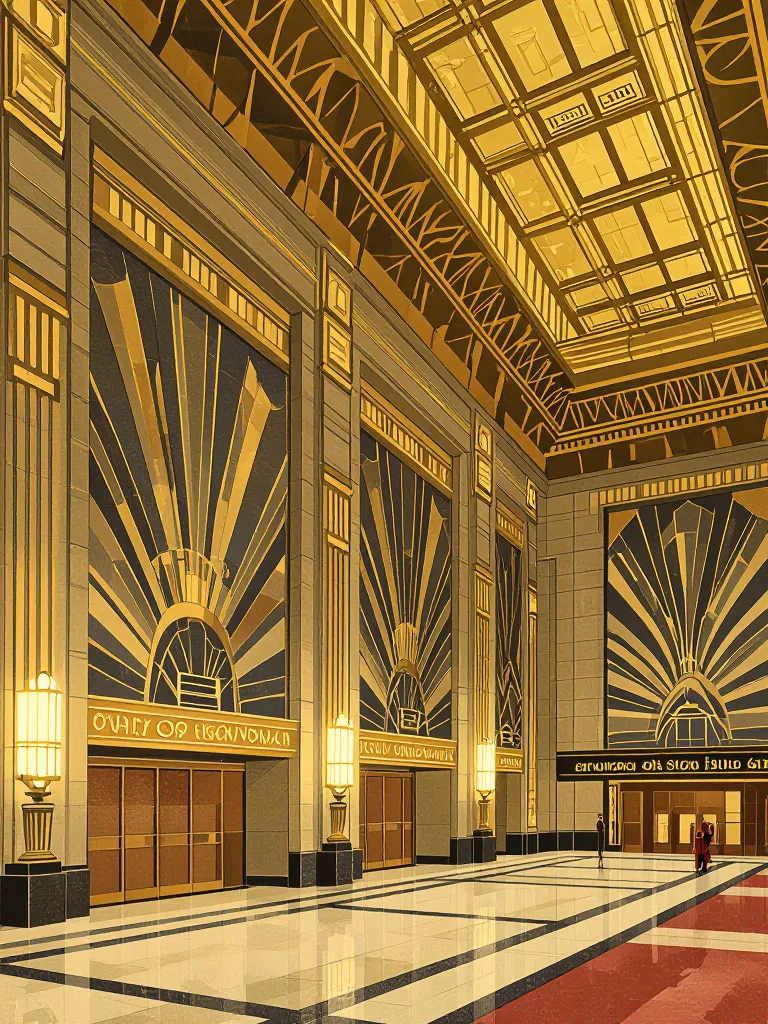
Although the term itself was coined later by a British art historian, Art Deco officially debuted at the Exposition Internationale des Arts in 1925 (Paris). It was called Style Moderne or Jazz Moderne, a successor to Art Nouveau and the Arts and Crafts movement, but with sharper edges. The early development of Art Deco was influenced by Beaux Arts traditions and the emerging classical moderne style, both of which contributed to its emphasis on grandeur and decorative detail.
Instead of organic curves, Art Deco favored:
This period saw an eclectic combination of influences, including Italian Futurism, which celebrated speed and dynamic movement, as well as elements from Cubism and ancient cultures. An early example of Art Deco design is the interior of the Chrysler Building, which highlights the use of simple geometric forms and bold ornamentation.
This new style showcased craftsmanship but embraced mass production, symbolizing a bridge between traditional craftsmanship and machine efficiency.
The 1925 International Exhibition of Modern Decorative and Industrial Arts in Paris was a defining moment for the Art Deco movement. This international exhibition brought together over 15,000 exhibitors from across the globe, all eager to showcase the latest in modern decorative arts and industrial design. The event was a dazzling display of innovation, luxury, and creativity, setting the stage for Art Deco to become a worldwide phenomenon.
Visitors to the exhibition were captivated by the bold use of modern materials—stainless steel, aluminum, and glass—paired with exotic and expensive materials like ebony, ivory, and lacquer. These combinations elevated decorative art to new heights, blending the allure of the past with the promise of the future. The international exhibition not only celebrated the artistry of modern decorative objects but also highlighted the importance of industrial arts and modern design in everyday life.
By emphasizing international collaboration and the fusion of traditional techniques with cutting-edge materials, the 1925 exhibition cemented Art Deco’s place in the history of decorative arts. It marked the official launch of the Art Deco style, inspiring designers and architects around the world to embrace this bold new vision.

Nothing displays the Art Deco style better than Art Deco architecture. Skyscrapers in New York became icons of modern power. The most famous examples:
Architecture schools and the Chicago School played a significant role in shaping the development of Art Deco architecture, influencing its adoption of innovative design principles and early skyscraper forms.
Compared to modern architecture, the international style, and the European international style, Art Deco marked a transition in urban landscapes toward modern forms—emphasizing geometric shapes, streamlined designs, and a move away from traditional ornamentation.
A masterpiece of height, speed, and stainless steel.
Classic Art Moderne geometry meets cultural ambition.
A cathedral of modern decorative arts and theatrical glamour.
Beyond New York, Miami, Chicago, Paris, and Mumbai are filled with Art Deco buildings, showing how the visual arts of the time influenced global skylines.

The relationship between the Art Deco movement and the Crafts Movement is a fascinating study in contrasts and connections. Both movements valued the decorative arts and the importance of skilled craftsmanship, but their philosophies diverged when it came to embracing modernity.
The Crafts Movement, rooted in the late 19th century, championed traditional craftsmanship and the beauty of handmade objects. In contrast, Art Deco designers were eager to experiment with modern materials and industrial design, welcoming mass production as a way to bring luxury and style to a broader audience. Yet, the influence of the crafts movement lingered in Art Deco’s attention to detail and quality.
Many leading Art Deco designers, such as Émile-Jacques Ruhlmann, found inspiration in the crafts movement’s dedication to fine workmanship. They combined traditional techniques with innovative materials like chrome, glass, and exotic woods, creating pieces that were both meticulously crafted and unmistakably modern. This blend of old and new gave Art Deco its unique edge—where traditional craftsmanship met the excitement of modern design and mass production.
In homes, the Art Deco design aesthetic took over through:
Many notable Art Deco pieces are now preserved in private collections and displayed in major museums such as the Metropolitan Museum and the Victoria and Albert Museum (often referred to as the Albert Museum), where their historical and artistic significance is highlighted.
It was opulent yet modern. Decorative artists designed radios, lamps, cars, perfume bottles, and everyday objects to look futuristic. Art Deco's lasting influence can be seen in decorative arts and museum collections worldwide, reflecting its enduring impact on design and culture.
This era was the birth of style as lifestyle.
Graphic arts were at the heart of the Art Deco style’s meteoric rise. Visionary Art Deco designers like A.M. Cassandre and Paul Colin transformed posters, advertisements, and magazine covers into works of art, using bold geometric forms, striking colors, and streamlined compositions. Their graphic design work didn’t just promote products—it defined the visual language of an era.
The power of graphic arts allowed Art Deco to reach into everyday life, from the covers of fashion magazines to the packaging of luxury goods. The style’s signature geometric patterns, stylized forms, and dramatic typography became instantly recognizable, making Art Deco a favorite for everything from travel posters to department store branding.
This embrace of graphic design helped Art Deco become more than just an architectural or decorative trend—it became a movement that shaped the look and feel of modern life. The influence of graphic arts ensured that Art Deco’s bold, glamorous aesthetic would leave a lasting mark on the world of visual arts and everyday objects alike.
Art Deco’s relationship with the avant-garde movements of the early 20th century was both dynamic and complex. While Art Deco designers drew inspiration from the radical ideas of Cubism, Futurism, and other avant-garde styles, they charted their own course by blending innovation with elegance and accessibility.
The geometric forms and bold colors that defined Art Deco owed much to the visual experiments of the avant-garde. Yet, unlike the avant-garde’s focus on breaking conventions and pushing boundaries, Art Deco sought to create a style that was both modern and widely appealing. The use of exotic materials and luxurious finishes set Art Deco apart, infusing everyday objects and grand buildings alike with a sense of glamour and sophistication.
Designers such as Tamara de Lempicka and Jean Dupas exemplified this fusion, incorporating avant-garde influences into their Art Deco designs while maintaining a commitment to beauty, order, and tradition. The result was a unique blend of modernity and classicism—a style that captured the spirit of the 20th century and continues to inspire artists and designers today.
Some of the most influential Art Deco artists and designers include:
Their work shaped the Art Deco golden ages, blending the fine arts with industrial design.
Art Deco sits between two World Wars. It rose with postwar luxury, peaked during the stock market crash resistance, and slowly faded after World War II as global priorities shifted. The Great Depression played a significant role in Art Deco's evolution, pushing the style away from opulence and towards more pragmatic, streamlined designs as economic austerity influenced architecture and industrial design. The onset of the Second World War further contributed to the decline of the traditional Art Deco style, as wartime austerity and resource scarcity led to a shift in design trends and a move away from elaborate decorative features.
Even then, a second wave emerged: Streamline Moderne, softer, sleeker, more aerodynamic. Think curved corners, chrome trim, ship-like movement. A late modern echo of the original flame.
One led to the machinery of the future, the other honored vines and curves of the earth.
From fashion to furniture, branding to visual arts, we still love the look because:
✨ It celebrates luxury and modernity
✨ It blends logic (geometry) with drama (gold, shine)
✨ It works in architecture, industrial arts, graphic design and more
✨ It remains one of history’s strongest design styles
The aesthetic never died. It just evolves, like great design always does.

If you ever want to recreate the Art Deco aesthetic digitally, a tool like starryai can help generate ornamental layouts, stylized patterns, and symmetrical structure references using AI. Great for moodboards, posters, or modern reimaginings of historical art movements. Just type a detailed prompt and let AI visualize new interpretations of Art Deco instantly.
The Art Deco movement is more than just design.
It’s energy, ambition, geometry, glamour, and the belief that art could shape the future.
And for a moment, it did.








.svg)