

Written by Mo Kahn on
April 13, 2026


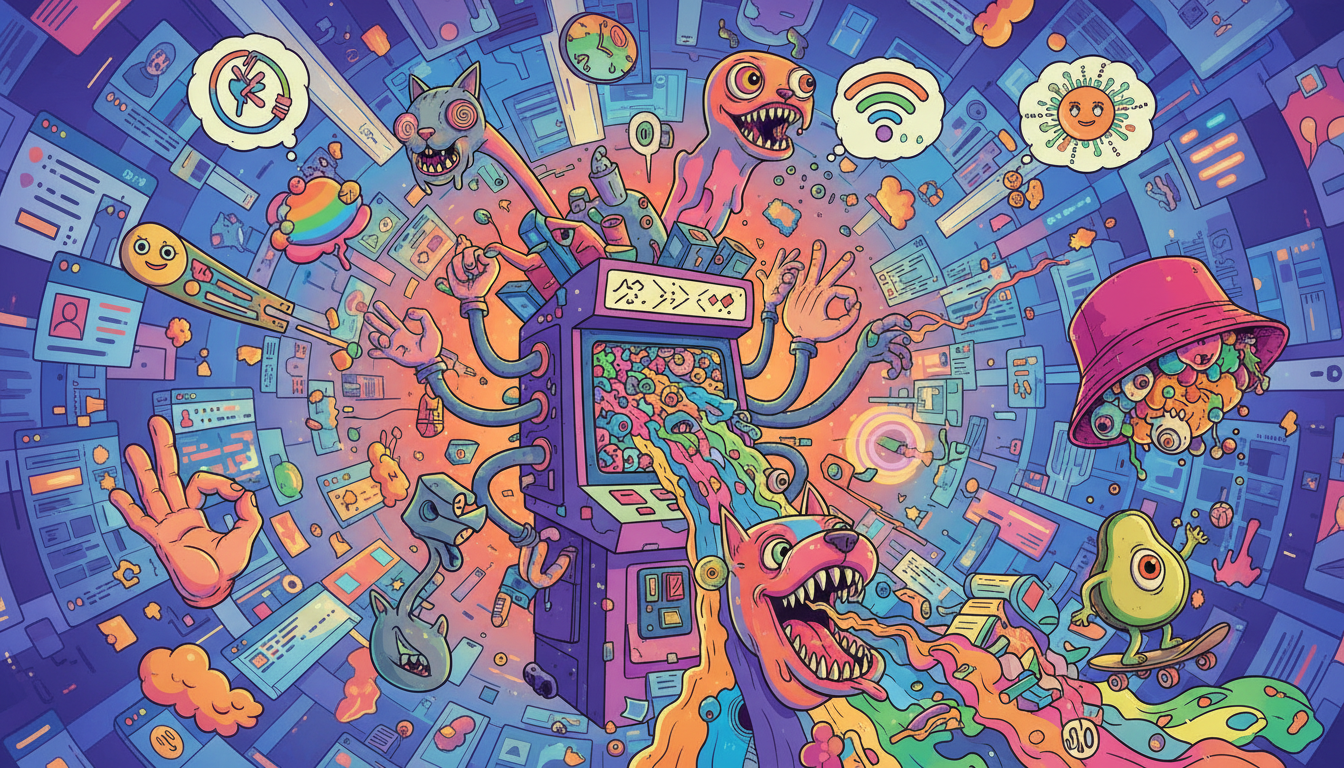
Brainrot generator is not a traditional software category in the way people talk about photo editors, video upscalers, or image background removers. It is an internet-native phrase. People use it when they want content that feels overcaffeinated, surreal, cursed, hyper-online, or weirdly impossible to stop looking at.
In 2026, that usually means a mix of absurd prompts, strange characters, chaotic visual combinations, meme logic, fandom language, and attention-first social content. Some people want brainrot text. Some want cursed images. Some want fake products, fake characters, or fully unserious visual ideas built for reposts and short-form feeds.
That is where starryai becomes useful. If the real goal is fast visual experimentation, starryai gives creators a way to test bizarre concepts quickly, see which ones land, and keep escalating the idea until it becomes memorable.
Most users searching this term are looking for one or more of these outcomes:
The point is usually not polish. It is velocity, novelty, and reaction value.
This keyword exists because social platforms reward content that feels instantly legible and instantly strange. Brainrot content works because it compresses a joke, a vibe, and a visual hook into something viewers understand in a second.
It is also a format that benefits from AI. Human-made surreal meme art takes time. AI makes it possible to test ten bad ideas in a row until one becomes a very good bad idea.
Even though the aesthetic feels random, strong brainrot content often follows repeating patterns:
There is usually one central subject people can identify immediately, such as a rat CEO, cursed mascot, haunted energy drink, or medieval influencer.
It may be photorealistic, anime-coded, fake-advertising style, fantasy oil painting, low-budget horror, or hyper-clean corporate design.
The viewer should feel something fast: confusion, disgust, delight, secondhand embarrassment, or the sense that the image should not exist.
People often assume brainrot is only about still images, but the best-performing content usually expands into several formats:
That matters because the keyword is bigger than one generator. It is a content workflow.
starryai works especially well when the creator needs to:
In practice, that means starryai can be used to create the first chaotic concept, then refine it toward a stronger final version instead of treating the first output as the punchline.
The easiest mistake is thinking that randomness alone is enough. Random does not always equal funny.
Example:
Tell the model how the scene should feel:
The best brainrot prompts often include one extra decision that makes the image feel specific rather than merely weird.
For example:
A premium studio advertisement for a luxury canned beverage called Goblin Focus, matte black can, glowing green accents, ultra-serious corporate branding, dramatic rim lighting, photorealistic.
Corporate headshot of a medieval wizard startup founder in a minimalist office, confident smile, expensive blazer, laptop with fantasy stickers, magazine-cover aesthetic.
Chaotic meme image of a tired raccoon DJ at 3 a.m., neon party lights, energy-drink cans everywhere, dramatic flash photography, internet-core humor.
The strongest brainrot usually comes from iteration.
This topic appeals to:
Not in the formal sense. It is more of a culture keyword for tools that help produce chaotic, meme-ready content.
It can mean both. Some people want text-first chaos, while others want cursed images, fake ads, or surreal motion ideas.
Yes, but only if the brand voice can support irony, weirdness, and trend-native humor without feeling forced.
A clear joke, a readable subject, and a strong visual style usually matter more than total randomness.
Because speed matters. Brainrot content works best when creators can test several ridiculous directions and keep the one that earns the strongest reaction.
Brainrot generator is really a signal of how online creativity works now. People are not just searching for software. They are searching for a fast way to make strange, hyper-shareable ideas feel visually real.
If the goal is more than random nonsense, the best approach is to start with one ridiculous concept, choose a strong aesthetic, and use a tool like starryai to iterate until the image feels specific enough to spread.



.svg)