

Written by Mo Kahn on
April 13, 2026


Yes, people do sell AI-generated art. The more useful question is not whether it is possible. It is whether you can do it responsibly, competitively, and in a way that creates real value for buyers.
That distinction matters because the AI art market has matured. Early on, simply using an image generator was novel enough to attract attention. In 2026, that is no longer true. Buyers have seen countless AI images. The creators who stand out are the ones who build a point of view, a recognizable style, a strong product format, or a specific audience connection around their work.
So if you are asking whether you can sell AI-generated art, the honest answer is yes, but selling it well requires more than generating an image and uploading it somewhere.
This topic can refer to several different business models:
These are very different businesses. Some are closer to ecommerce. Some are closer to freelance services. Some are closer to licensing. The strategy changes depending on the format.
Creators are searching this because AI tools make image production much faster, but faster production does not automatically answer the business questions around originality, customer expectations, platform rules, or long-term trust.
People want to know:
Those are the right questions. The biggest challenge is rarely generation. It is product quality and differentiation.
If your work looks identical to a thousand other AI outputs, it is hard to build a business around it. That is true on marketplaces, on print-on-demand stores, and in custom client work.
The creators who do better usually have at least one of these advantages:
For example, a random fantasy portrait may be easy to generate. A thoughtfully art-directed series of dreamy celestial animal prints for nursery decor is a much more saleable product. The difference is not the tool. It is the creative framing.
Every platform has its own policies, and those policies can evolve. Some marketplaces focus on handmade or original work standards. Others care more about intellectual property or deceptive listings. Before selling, check the current rules where you plan to list.
AI-related copyright questions can vary by country, by platform, and by how much human creative control shaped the final result. If the legal side of your business is important, treat this as an area to monitor rather than something to assume is permanently settled.
Even if selling is allowed, generic outputs are weak products. A buyer rarely wants some AI image. They want a look, a feeling, a niche, or a product they cannot easily get elsewhere.
If customers feel misled about what they are buying, that creates a trust problem. Clear positioning, strong product photos or previews, and honest listing quality matter.
AI art is more likely to sell when it does one or more of the following:
In other words, the product has to make sense in the real world.
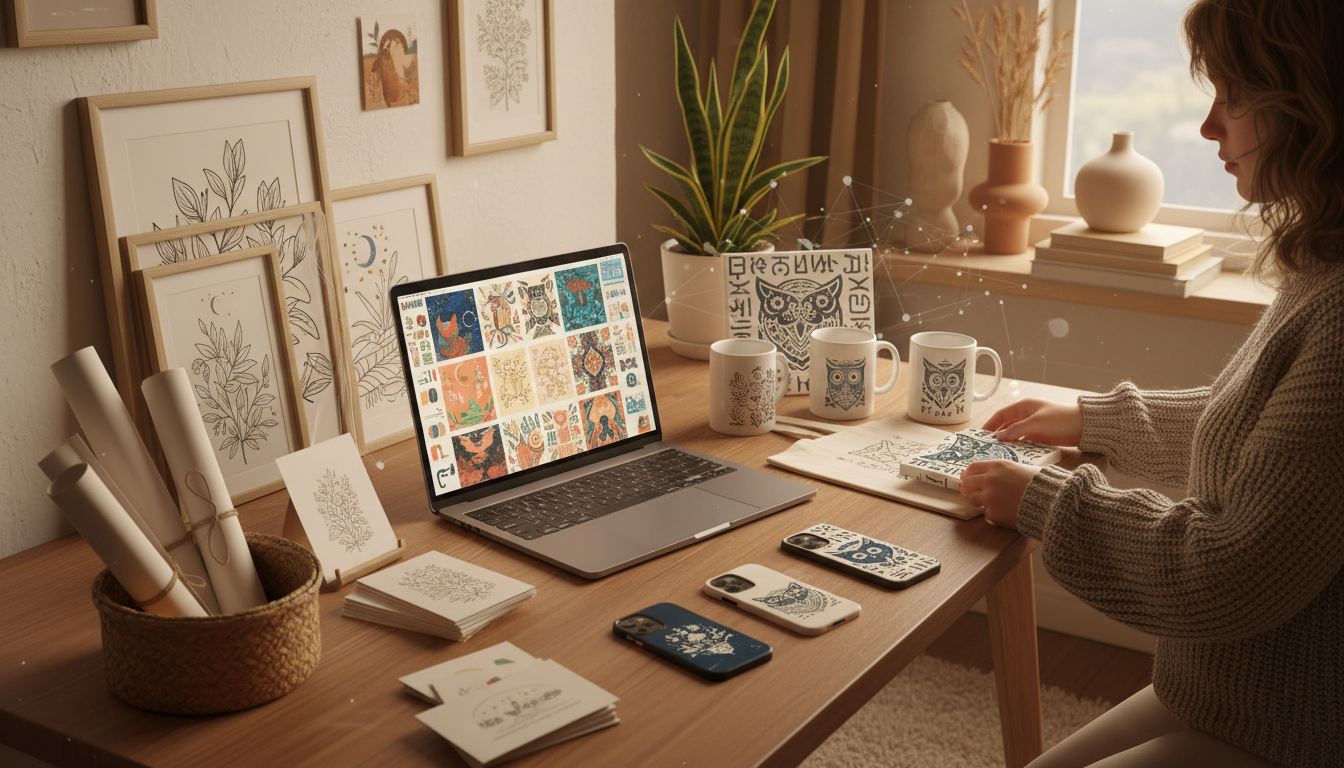
A printable wall art set for a boho nursery, a pack of fantasy bookmarks, or custom pet portraits with a distinct style all have clearer buyer logic than random unrelated AI images.
starryai is useful when the goal is not only to generate images, but to develop a visual language. That is an important difference.
A stronger seller workflow in starryai often looks like this:
That process helps you move away from one-off experimentation and toward a body of work that actually feels market-ready.
Instead of selling one image, build a themed set:
Customization creates value that buyers cannot easily replace.
Examples:
AI-generated visuals can support products that have clear use cases.
Examples:
If the art looks like default AI output, buyers will scroll past.
Broad, vague shops struggle. A specific aesthetic usually performs better.
Mockups, cropping, file quality, and listing design matter almost as much as the art.
Generating hundreds of images fast does not matter if none of them form a coherent offer.
Generation is often the starting point, not the finished product.
A buyer pays more readily when the work feels intentional. You can increase that sense of intention by:
This is where creative direction becomes more valuable than sheer volume.
Different audiences feel differently about AI art. Some buyers care deeply about how the work was made. Others care more about whether they like the final result.
A practical approach is to focus on honesty, product quality, and originality in presentation. If you are building a long-term brand, trust is more valuable than short-term ambiguity.
Instead of asking Can I sell AI-generated art? ask:
Those questions lead to stronger products and stronger businesses.
Some do, but success usually comes from product-market fit, creative direction, and presentation rather than from AI generation alone.
Usually not. A business needs positioning, audience fit, strong listings, and products that make sense for buyers.
Yes. Always review the current rules for the platform where you want to sell because policies and expectations can change.
The strongest products often have a niche audience, a distinct visual style, or a useful format such as prints, bundles, or personalized pieces.
Because it helps creators iterate visually, refine a style direction, and build consistent collections rather than stopping at random experimental outputs.
You can sell AI-generated art, but the market is no longer impressed by generation alone. The real opportunity is in turning generative speed into stronger products, stronger niches, and stronger visual identity.
If you use starryai as part of a thoughtful creative process, not as a shortcut to generic volume, you have a much better chance of creating AI art that people actually want to buy.





.svg)