

Written by Mo Kahn on
April 13, 2026


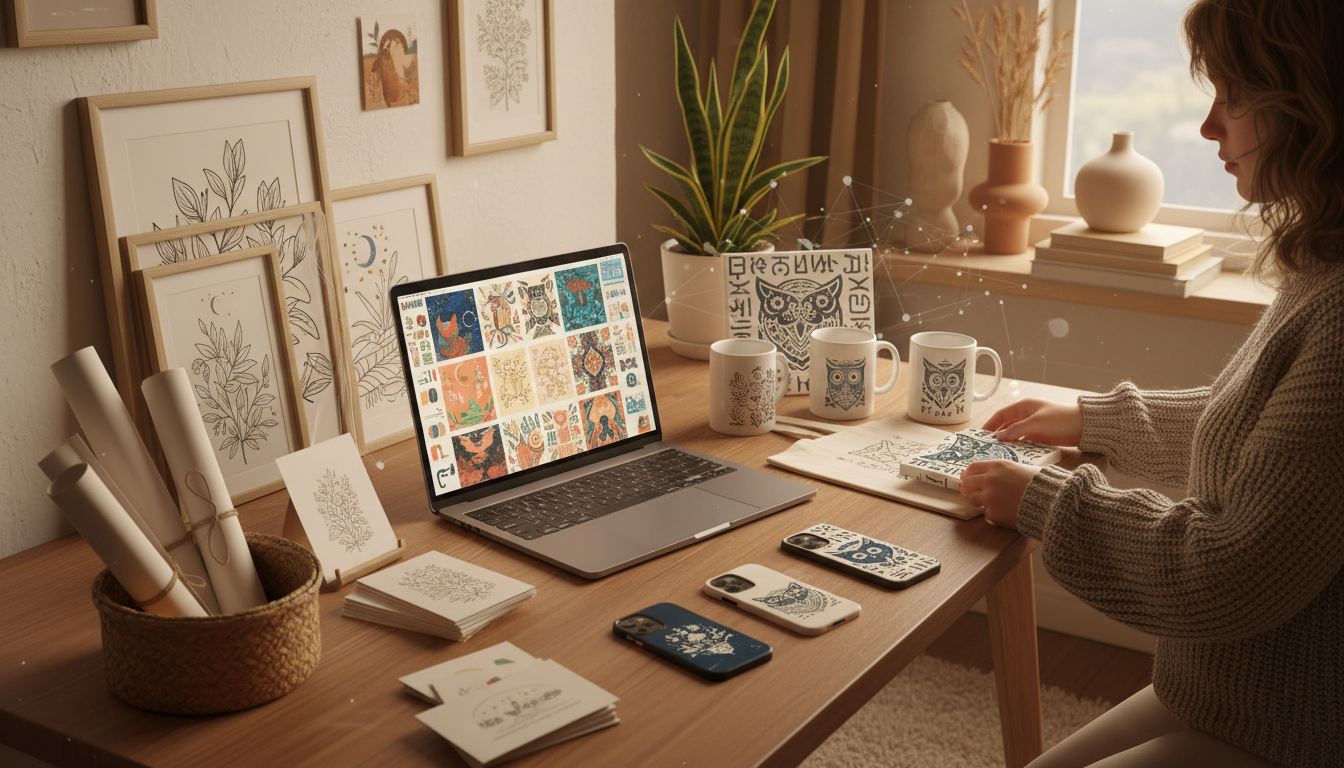
Selling AI art on Etsy is possible, but it is not as simple as generating a beautiful image and uploading it to a listing. Etsy is a marketplace, not just a gallery. That means success depends on product thinking, presentation quality, niche clarity, and marketplace fit.
This is the part a lot of creators miss. AI makes it easier to produce artwork, but easier production also means more competition. If you want to sell AI art on Etsy in 2026, the goal is not only to make images. The goal is to create products people want to buy.
That shift changes everything.
A social post can succeed because it gets attention. An Etsy listing succeeds because it convinces a buyer to spend money.
That means your art has to function as a product.
Buyers usually care about questions like:
The strongest Etsy sellers answer those questions through both the product and the listing.
Random AI images usually struggle. Purpose-driven products do better.
Categories that tend to make more sense include:
The common thread is usefulness and audience fit. Buyers rarely search for AI image. They search for a style, mood, use case, or gift idea.
One of the biggest mistakes new sellers make is starting with the generator instead of the customer.
A better sequence is:
This is much stronger than opening a generator, creating whatever looks pretty, and hoping the market will figure out what the shop is for.
Strong niches often have clear buyer intent.
Examples include:
The more specific the niche, the easier it becomes to build a coherent shop identity.
starryai is useful for Etsy workflows because it helps sellers do more than generate isolated images. It supports exploration, style-building, and repeatability.
That matters because a real Etsy shop needs:
With starryai, the best workflow is usually not generate one image and sell it. It is develop a visual direction, build several strong variations, refine the best ones, and package them as products.
This is one of the simplest formats because it has a clear use case. Buyers want art they can print and display.
Sets often perform better than single files because they feel more substantial and make the purchase easier to justify.
Custom pet portraits, family portraits, and name-based fantasy or zodiac pieces create a stronger value proposition.
Holiday decor, wedding-themed downloads, nursery themes, and gift-ready concepts can work well if the visual identity is clear.
A buyer is more likely to purchase when the work feels designed, not random.
You can increase that sense of value by:
The product story matters almost as much as the image itself.
A practical workflow looks like this:
This helps you build a shop that feels intentional.
Your listing title and description should do more than state what the file is.
A strong listing usually communicates:
For example, Celestial Fox Nursery Print Set is clearer and more saleable than AI Animal Art Download.
If the shop has no niche or consistent style, buyers have no reason to remember it.
A scattered shop feels weaker than a focused one.
Many buyers decide based on how well they can imagine the product in their space.
More listings do not always mean more sales. Cohesion usually matters more.
The art should map to a reason someone would purchase it, not just admire it briefly.
Selling on Etsy also means thinking practically.
That includes:
This is where many shops either become a business or remain a hobby experiment.
The strongest Etsy sellers usually do not win because they discovered a secret prompt. They win because they create a recognizable mini-brand.
That can come from:
AI helps with production speed, but brand clarity still does the selling.
People do sell AI-assisted products on Etsy, but marketplace expectations, product quality, and shop positioning matter a lot. Always check the current platform rules before listing.
Art that fits a specific niche, decor style, or personalized use case usually performs better than generic one-off images.
Bundles often feel more valuable, but the right choice depends on the niche and the product format.
Because it helps you explore style directions, build consistent collections, and create stronger product-ready visuals instead of stopping at one random output.
No. Strong shops also need niche clarity, better listings, polished mockups, and products that feel genuinely useful to buyers.
If you want to sell AI art on Etsy, think like a shop owner, not only like a prompt writer. Buyers are not purchasing the fact that AI was used. They are purchasing a product that fits their space, taste, or gifting need.
Used well, starryai can help you build a more cohesive aesthetic, produce stronger collections, and turn visual ideas into products that make sense on a real marketplace. That is the difference between uploading images and building a shop that can actually grow.






.svg)