

Written by Mo Kahn on
September 14, 2026


Style inspiration becomes useful only when it leads to repeatable creative decisions. A beautiful reference can suggest a mood, but a production-ready direction also tells you what to generate, which colors to protect, where the focal point belongs, and how the result will work as a post, book cover, avatar, or product graphic. That distinction matters as visual discovery moves toward social feeds. A 2024 survey of about 1,000 Americans found that 64% said social media influences their fashion sense, rising to 3 in 4 among Gen Z respondents (survey findings on digital style discovery).
The seven ideas below turn recognizable aesthetics into practical workflows for starryai. Each one pairs a visual recipe with a focused prompt method, an adaptation path, and a quality-control check. Use them to experiment quickly, then save the combinations that can support a consistent creative identity. For fashion-led references, even a specific piece such as Margaux mini skirt inspiration can become a useful starting point for color, texture, and styling decisions.
Y2K maximalism works because it turns an ordinary portrait into an immediate visual event. Saturated pinks, icy blues, holographic highlights, butterfly clips, platform shoes, baby tees, glossy lips, and playful stickers create a dense image that reads quickly in a TikTok feed. The strongest results balance nostalgia with one contemporary detail, such as a modern phone case, current makeup shape, or clean studio crop.
Upload a selfie, then describe the transformation in layers rather than relying on “Y2K” alone. Specify the subject first, followed by styling, lighting, background, and surface effects. Emoji references can help reinforce the tone when used deliberately, especially for stars, hearts, sparkles, or butterflies.
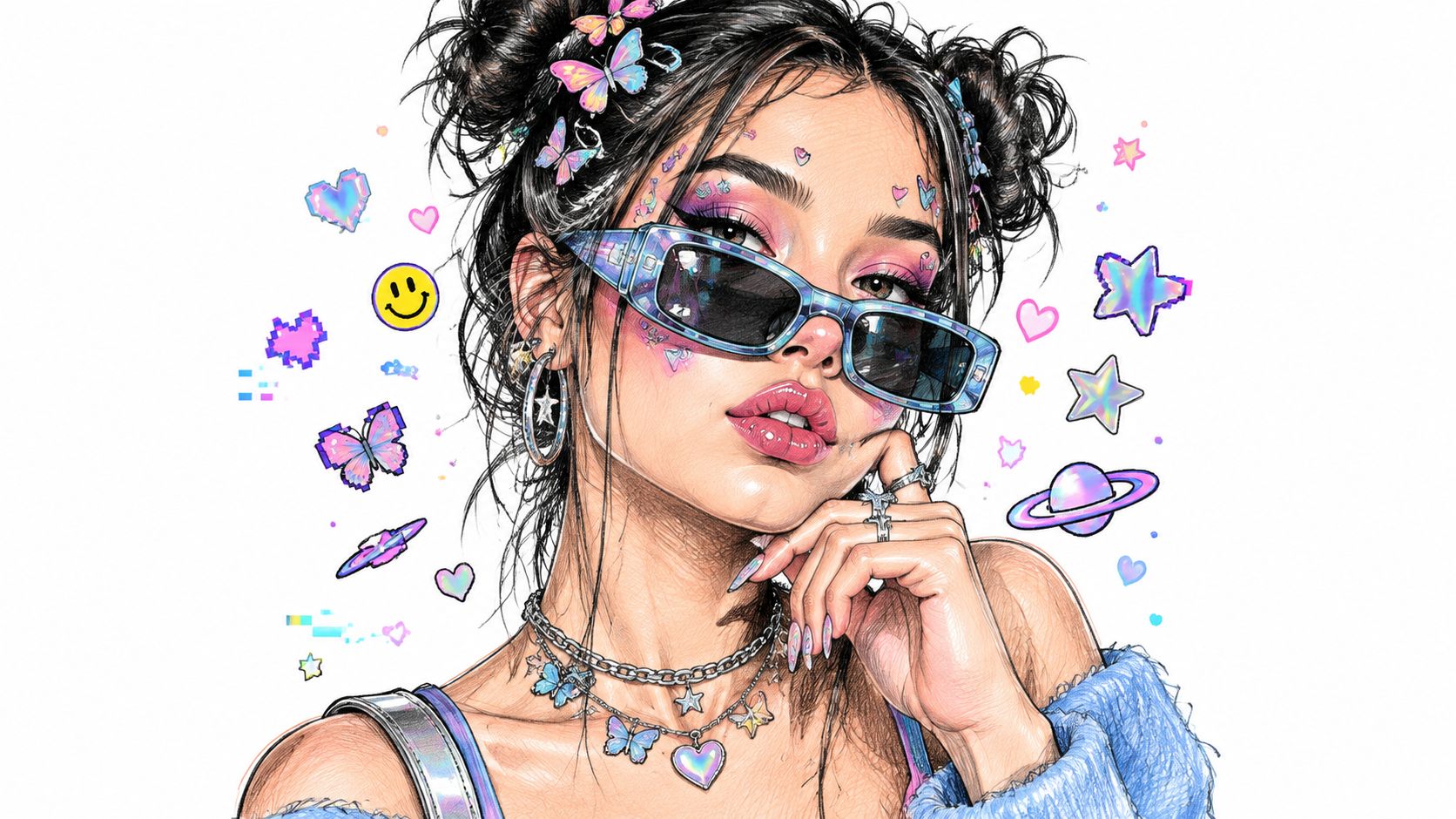
A focused prompt might read: selfie transformation, confident young woman with space buns, butterfly clips, baby tee, platform shoes, holographic accessories, saturated pink and electric blue color grading, playful sticker accents, glossy flash photography, early-2000s pop styling, centered vertical composition. Generate variations by changing one variable at a time. If you alter the palette, keep the pose and accessories stable so you can identify what improved the image.
Use a close crop for social posts and profile images. For a cover or poster, move the face away from the center and reserve clean space for typography. Save successful color combinations as reusable templates, then apply them to a series of transformations so the work feels branded rather than randomly retro.
Quality check: Zoom in on eyes, clips, stickers, and jewelry. Maximalist details can become muddy when the image is reduced, so remove anything that competes with the face before publishing.
For a more personalized workflow, compare selfie inputs and prompt-led variations through the AI image generator of me. The same visual direction can support a transformation video, a carousel, or a small merch graphic, but each format needs its own crop and detail test.
Here's a short visual reference for the transformation rhythm:
Fantasy portraiture succeeds when the image communicates a character, not merely a collection of glowing effects. A celestial woman with a flower crown, a weathered ranger with a cracked compass, or an elf heir carrying an inherited blade gives the viewer a reason to look longer. Soft rim lighting, translucent fabric, floating particles, and controlled gold accents then support the story.
This style fits indie author covers, tabletop role-playing profiles, game avatars, and digital art listings. Start with a short character brief before writing the prompt. Include role, temperament, setting, wardrobe, emblem, and lighting direction. A selfie can provide facial structure, while the text supplies the fictional identity.
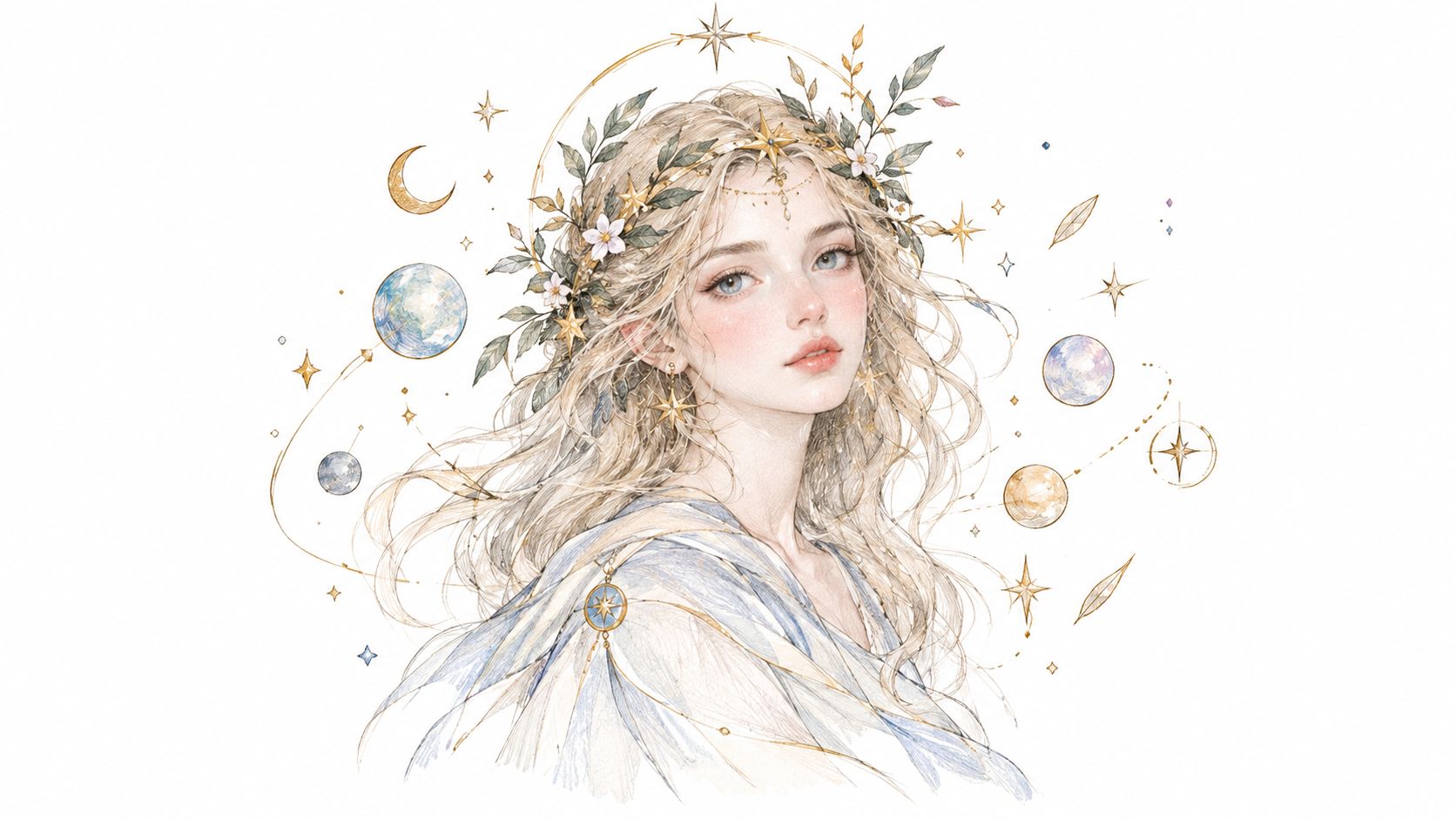
Try: ethereal elven astronomer, calm and observant expression, flowing ivory and midnight-blue robes, golden star motifs, leafy flower crown, distant moonlit observatory, soft celestial glow, painterly fantasy portrait, detailed face, atmospheric depth, space above the head for title typography. References such as Dungeons & Dragons character sheets, romantasy covers, and Genshin Impact-inspired design can guide the visual vocabulary, but the prompt should still define your own character.
Generate several expressions and poses while keeping the character's palette, emblem, hairstyle, and key garment consistent. For a book cover, preserve negative space and avoid placing intricate effects behind the title area. For an avatar, simplify the background and enlarge the face. For print-on-demand products, inspect fine lines, stars, and jewelry at the intended output size.
The fantasy character concept art workflow can help structure references into a more coherent design process.
Production test: Ask whether the portrait remains identifiable in a small thumbnail. If the face disappears into the glow, reduce atmospheric effects and strengthen the silhouette.
Cottagecore becomes more distinctive when interior styling and clothing share the same material language. A linen blouse beside a worn wooden table, a wildflower arrangement echoing a floral print, or a straw hat placed near vintage ceramics creates visual continuity. Warm cream, sage, faded rose, muted yellow, and natural brown keep the scene gentle without making every element look artificially aged.
Instagram was the most popular social platform for interior design inspiration in a 2026 UK survey, at 44%, while TikTok led among Gen Z respondents at 53% (UK style inspiration survey). The useful takeaway for creators is practical: a cottagecore image needs to work both as a composed room scene and as a quick mobile impression.
Use prompts that join place, garment, texture, and activity. For example: sunlit cottage kitchen, vintage linen dress, embroidered apron, picket fence visible through open window, wildflower garden, handmade pottery, preserves on wooden shelves, soft morning light, warm cream and sage palette, editorial lifestyle photography. That prompt gives starryai more than a mood label to interpret.
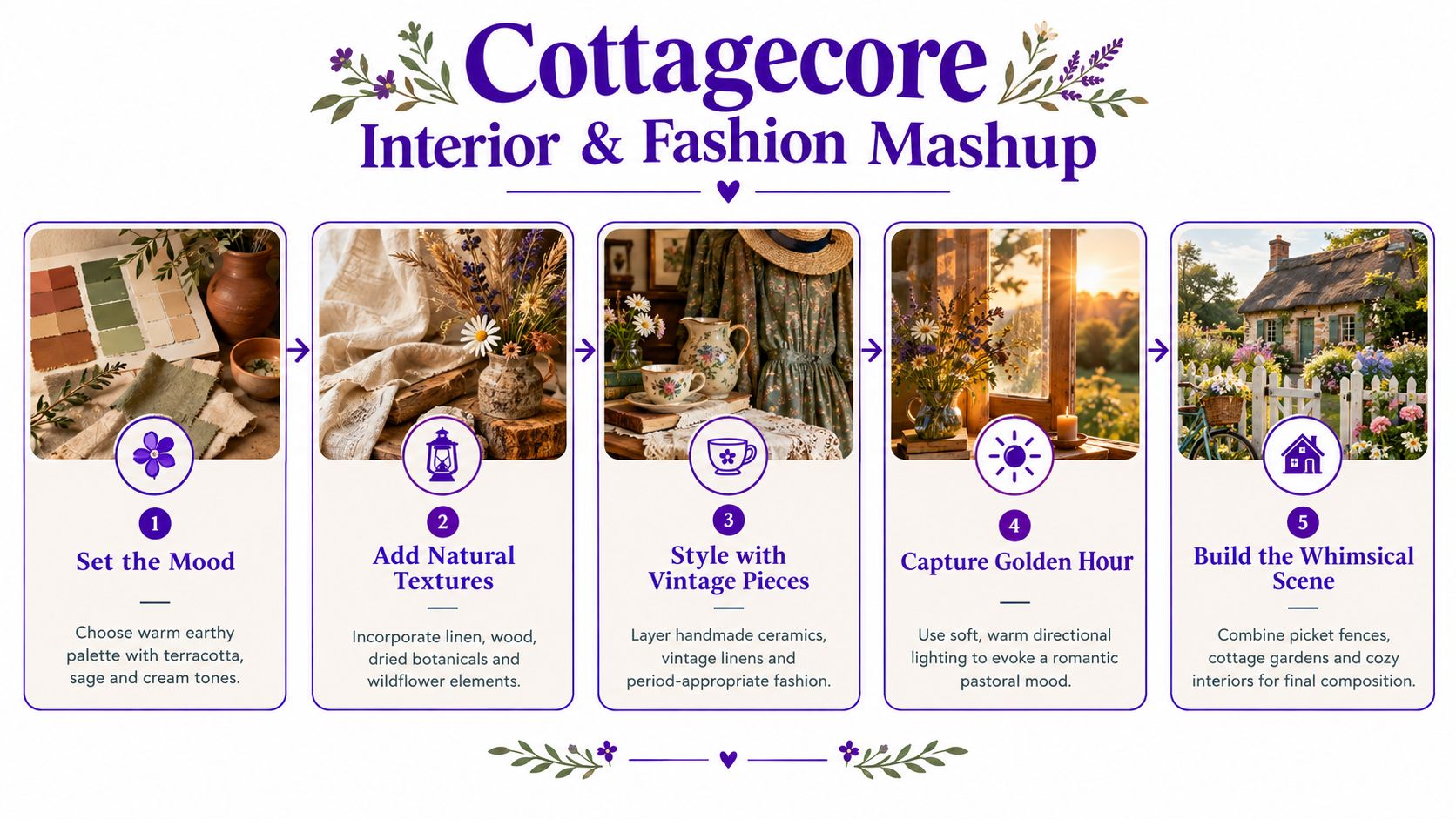
For a social grid, generate related scenes such as a reading corner, garden table, outfit detail, and pantry shelf. For an Etsy seller, use one hero image with a clear product area and separate close-ups for texture. For a personal brand, combine a selfie-led fashion image with an interior setting that repeats the same colors.
Practical rule: Choose three recurring anchors, such as linen, wildflowers, and aged oak. Repetition creates recognition, while changing every prop makes the series look disconnected.
Check hands, tableware, garment seams, and repeated patterns before publishing. Cottagecore depends on tactile credibility, so distorted objects are especially noticeable.
Cyberpunk visuals need structure beneath the glow. Hot pink and electric blue neon, rain-slick streets, geometric signage, reflective jackets, and hard-edged shadows create energy, but too many luminous elements can flatten the subject. Give the character a strong silhouette and let one light source dominate.
This direction suits Discord avatars, gaming profiles, streaming overlays, emotes, synthwave artwork, and print-on-demand designs. Use a square composition for avatars and state the crop directly in the prompt. A useful recipe is: futuristic street racer avatar, cropped shoulders-up, reflective black jacket, hot pink and electric blue neon, angular visor, rainy megacity background, cyan rim light from the left, magenta practical light from the right, bold silhouette, square composition, high contrast.
The subject should remain legible at small size, while merch needs a cleaner version with fewer background details. Generate a core character first, then create controlled variations by changing expression, jacket detail, helmet shape, or background sign. Keep the face, palette, and emblem stable across the series.
An avatar can tolerate atmospheric rain, tiny signage, and layered reflections because the image is viewed as a personal identifier. A shirt graphic needs stronger separation, fewer small elements, and a background that can be removed or simplified. Export a high-resolution version, then inspect the artwork against both light and dark garment colors.
For character development beyond surface effects, the sci-fi character design guide offers a useful conceptual direction.
Quality-control check: Convert the draft to grayscale. If the face, outline, and main emblem merge together, the neon palette is doing too much work. Increase value contrast before adding more color.
Maximalist graphic design earns attention through controlled abundance. Strong blocks of orange, cobalt, lime, red, or violet can sit beside contrasting patterns, oversized type areas, collage fragments, and illustrated objects. The design feels intentional when every layer has a role. It feels noisy when the focal message competes with decoration.
This style fits social campaign graphics, music covers, streetwear, event posters, and promotional merchandise. Start with a hierarchy statement: identify the subject, the supporting shape, and the area that must remain quiet for text. Then prompt for composition rather than listing disconnected objects.
Try: bold editorial collage, cobalt blue and vivid orange color blocks, oversized central flower, playful geometric pattern fragments, rough risograph texture, layered paper edges, asymmetric composition, high-energy indie album artwork, clear negative space in the upper left for typography. Generate several versions, but compare them for balance rather than picking the most crowded frame.
Save a small set of approved color relationships and reuse them across a campaign. One variation can lead with blue, another with orange, while the supporting colors and texture remain consistent. This approach gives social posts and merch a family resemblance without forcing every design to be identical.
References such as contemporary street art, risograph printing, bold Versace campaigns, Diesel styling, and indie or hip-hop album art can help define the tone. Treat them as directional references, not as material to reproduce directly. Original combinations reduce the risk of producing a generic imitation.
Composition test: Cover the design's decorative areas with your hand or a crop. If the intended message or subject loses its authority, simplify the layers before increasing saturation.
Check edges, thin lettering, pattern collisions, and the final print background. A graphic that looks lively on a bright screen may need stronger separation when printed on fabric or matte paper.
Anime and manga-inspired work depends on line quality, expression, costume logic, and readable gesture. Large eyes alone won't create a convincing character. A strong pose, distinct hairstyle, clear accessory, and controlled background give the illustration a personality that can carry a visual novel, webcomic, fan-art concept, or merchandise collection.
Prompt with the character's role and action first. Then add illustration method, palette, costume, expression, and framing. For example: determined school-club mechanic, dynamic three-quarter pose, expressive anime character illustration, short dark hair with a red streak, oversized utility jacket, mechanical charm on backpack, warm sunset palette, clean line art, cel-shaded lighting, background simplified for sticker design. Selfie inputs and emoji elements can personalize the face or attitude without making the result feel like a generic avatar.
Generate a base portrait, full-body pose, alternate expression, and accessory detail using the same core descriptors. For a visual novel, reserve consistent space for dialogue boxes and keep the body angle compatible across expressions. For merchandise, simplify the background and check whether the outline remains clear after scaling.
A poster needs a stronger composition than a character icon. The Cowboy Bebop poster guide is a useful reminder that recognizable character design and poster layout must work together, not separately.
Quality-control check: Compare the hands, eyes, costume symbols, and hair accessories across variations. Small inconsistencies can undermine a character series, especially when fans expect the same design to recur.
Specific references such as Studio Ghibli-inspired softness or Jujutsu Kaisen-inspired intensity can help communicate intent, but add original setting and character details. The more precise the story logic, the less the final image depends on a borrowed surface style.
Minimalism isn't the absence of decisions. It relies on deliberate material, proportion, lighting, and negative space. Scandinavian oak, white linen, brushed metal, pale stone, charcoal tailoring, or a single olive tree can create a premium visual language when the composition gives each element room to register.
This style works for luxury branding, professional portfolios, product pages, interior design presentations, and polished personal branding. Prompt for one focal subject and specify what should remain empty. A useful direction is: modern interior and fashion editorial, neutral-toned armchair, Scandinavian oak, white linen, olive tree, coordinated winter outfit on a standing model, soft directional daylight, pale plaster wall, restrained palette, generous negative space, premium catalog composition.
For e-commerce, keep the product large enough to inspect and avoid dramatic shadows that obscure material. For a professional profile, prioritize the face and posture, then use a quiet architectural setting. For a cover, place the subject off-center if the title needs room, but don't fill the empty area with decorative objects just because it feels unused.
High-end fashion campaigns from Céline and The Row, luxury furniture portfolios, and Apple's restrained product language can inform the balance, but the prompt should describe observable choices such as matte surfaces, pale tones, and soft side light.
Quality-control check: Remove one object from the frame. If the composition becomes clearer, keep it removed. Minimalist work fails when creators confuse emptiness with a need to add another prop.
| Style | Implementation Complexity 🔄 | Resource Requirements ⚡ | Expected Outcomes ⭐📊 | Ideal Use Cases 📊 | Key Advantages 💡 |
|---|---|---|---|---|---|
| Y2K Maximalist Selfie Transformation | 🔄 Medium, multi-layer overlays and color coordination | ⚡ Moderate, stickers, presets, color grading tools | ⭐⭐⭐⭐, high viral potential and immediate engagement | 📊 TikTok/Reels, influencer aesthetics, seasonal challenges | 💡 Strong nostalgia-driven shareability; easy to theme |
| Ethereal Fantasy Character Portrait Design | 🔄 Medium, detailed lighting and motif control | ⚡ Moderate–High, many generations, high-res outputs for print | ⭐⭐⭐⭐, professional-grade character art, print-ready | 📊 Book covers, RPG character sheets, game/concept art | 💡 Highly customizable; appeals to literary and gaming niches |
| Cottagecore Interior & Fashion Mashup | 🔄 Low–Medium, composition and authentic prop selection | ⚡ Low–Moderate, textures, mood boards, lifestyle staging | ⭐⭐⭐, steady engagement and long-term traction | 📊 Etsy shops, Pinterest boards, lifestyle branding | 💡 Timeless, relatable aesthetic that builds loyal audiences |
| Cyberpunk Neon Avatar & Merch Design | 🔄 Medium, precise contrast, geometric composition | ⚡ Moderate, color profiling, high-res exports for merch | ⭐⭐⭐⭐, strong recognizability; merch-ready visuals | 📊 Avatars, esports branding, streaming overlays, merch | 💡 Bold, memorable branding; scalable to products |
| Maximalist Graphic Design & Color Blocking | 🔄 High, requires strong design sensibility and balance | ⚡ Moderate–High, iterations and print-ready files | ⭐⭐⭐⭐, high stop‑scroll impact for marketing campaigns | 📊 Social campaigns, album art, bold merchandise | 💡 Immediate visual impact; versatile across industries |
| Anime & Manga Inspired Character Generation | 🔄 Medium, needs prompt specificity for consistent stylings | ⚡ Moderate, reference images, multiple variations; review licensing | ⭐⭐⭐⭐, large fanbase engagement and commercial potential | 📊 Visual novels, fan art, game characters, merch | 💡 Highly customizable; taps into a global, dedicated audience |
| Minimalist Modern Interior & Fashion Styling | 🔄 Low, emphasis on restraint and precise execution | ⚡ Low–Moderate, high-quality lighting/material references | ⭐⭐⭐, professional, trustworthy brand perception; longevity | 📊 Luxury branding, portfolios, high-end e‑commerce | 💡 Timeless, premium positioning; easy to scale across media |
The right style inspiration depends on the job, not just personal taste. Y2K maximalism and cyberpunk offer fast visual impact for social posts and avatars, but their dense details need careful reduction for merchandise. Ethereal fantasy supports character-led covers and collectible art, while cottagecore creates a warmer lifestyle system across interiors, fashion, and handmade products. Maximalist graphic design suits campaigns that need strong color and movement. Anime and manga-inspired art works best when a recurring character must remain recognizable. Minimalist styling gives luxury and professional projects more breathing room.
Start with the focal subject. Decide whether viewers should notice a face, garment, product, character, room, or title first. Then define the palette, lighting direction, material cues, and crop. A prompt becomes easier to control when these decisions appear in that order.
Social discovery also rewards practical translation, not only attractive references. A 2026 UK survey found that 64% of consumers felt the industry offered too many options but not enough styling guidance, while 68% said knowing what to buy was easier than knowing how to wear it (survey on the gap between inspiration and practical styling). The same principle applies to visual creation. Don't stop at “make it cottagecore” or “make it cyberpunk.” Define how the look should function in the final format.
A reference should improve a specific attribute rather than decorate the prompt. A TU Delft styling-tasks study found that near-field examples improved personality coherence and visual coherence, while originality stayed similar to control conditions. Its conclusion is useful for any creator: choose references that match the quality you want to improve, whether that's composition, palette, character identity, or material realism (summary of the styling-tasks research).
Avoid copying a feed too closely. A 2026 forecast identified directions including Dots, Brut Denim, Romantic Fabrics, Variations of Checked, Moccasins, Alternative Animal Prints, Creamy Yellow, Ruffles and Bubble-Hem, Purple Hues, and The New Raw, with projected Big Dots visibility of +55% in Europe and +33% in the U.S. versus the prior year (2026 fashion forecast). Those directions can spark a prompt, but your strongest system will combine a trend with a repeatable constraint, such as one signature color, a fixed lighting setup, or a recognizable crop.
Finally, review rights and authorship before commercial publication. The U.S. Copyright Office's AI initiative, which began in early 2023, addresses copyright in AI-generated works and the use of copyrighted material in AI training (U.S. Copyright Office AI initiative overview). Independent legal guidance summarizing current U.S. law says purely AI-generated images generally can't receive copyright protection on their own because copyright requires human authorship (overview of AI image copyright considerations). Keep records of your prompts, edits, compositing, and design decisions, and verify any commercial-use terms that apply to your workflow.
Use starryai to turn selfies, text prompts, and emojis into fast style experiments across portraits, characters, interiors, avatars, and merch concepts. Start with one of the seven visual systems, generate a focused series, and visit starryai to develop the version that fits your audience and final format.


.svg)