

Written by Mo Kahn on
July 1, 2026


From Prompt to Product: The New Era of Merch
You probably have a folder full of half-finished ideas right now. A phrase that would look good on a hoodie. A selfie that could become a stylized print. A niche fandom joke that your audience would absolutely wear if you could just turn it into a clean design fast enough.
That used to be the hard part. Merch creation often meant waiting on a designer, revising mockups, simplifying artwork for print, then hoping the final file worked across shirts, totes, stickers, and posters. Now the workflow is different. With tools like starryai, you can move from prompt to concept art in minutes, then refine what merits production.
That shift matters because merchandise design ideas now sit inside a much larger commercial space. One estimate values the merchandise designing market at USD 170.6 billion in 2023, with projections to reach USD 426.7 billion by 2033, alongside a projected 2026 T-shirt market value of $30.68 billion and a projection of $52.8 billion by 2029, according to Market.us on the merchandise designing market. In practical terms, smart merch concepts aren't just graphics. They're systems that can stretch across multiple product types.
The good news is that creators can move faster than ever if they build with adaptability in mind. If you want a grounded starting point before you launch, these practical tips for print on demand pair well with the AI-first ideas below.
Custom portrait merch is one of the easiest ways to make AI feel personal instead of gimmicky. Someone uploads a selfie, you run it through starryai in a distinct visual style, then build the result into a shirt, hoodie, poster, or framed print. That works for Etsy sellers, creator merch, graduation gifts, pet portraits, and even indie authors turning readers into characters from a fictional world.
The appeal is obvious. It doesn't look mass-produced because it isn't. Each piece starts from a real face, then gets transformed into anime, oil painting, cyberpunk, graphic novel, or dreamy editorial art.
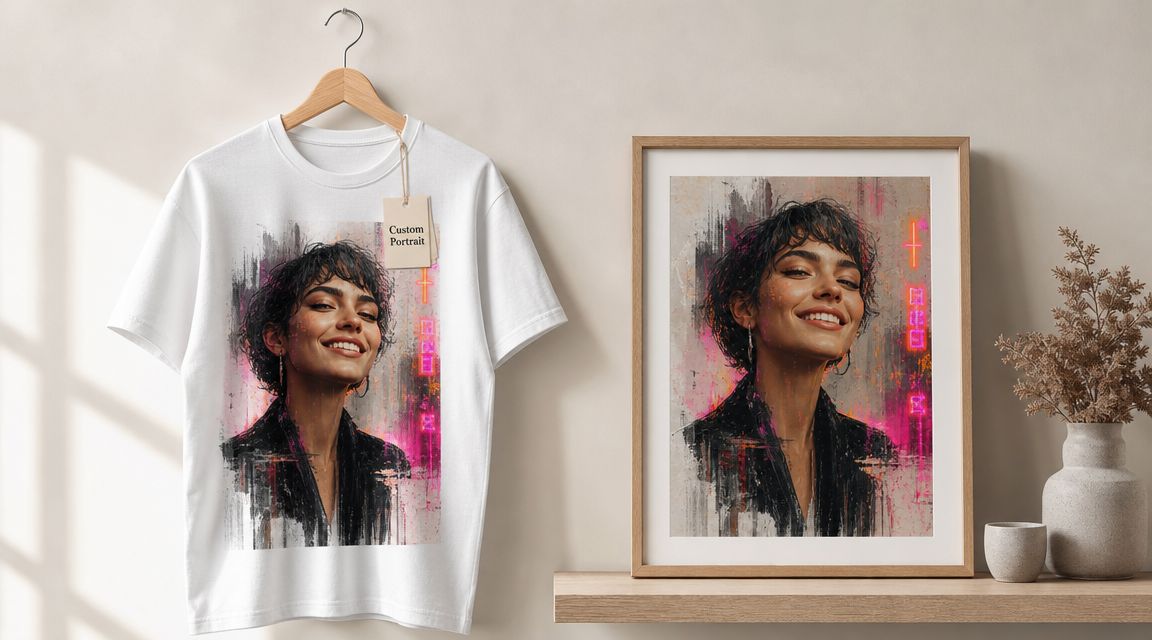
Portrait merch fails when the image is beautiful on-screen but muddy on fabric. You want clear facial separation, defined shadows, and a background that doesn't compete with the subject.
A few formats consistently work better than others:
Practical rule: Start with a well-lit image, test more than one style, then check the design at actual shirt-print size before you commit.
If you're selling this as a service, don't stop at one product. Offer a matching bundle. Shirt, hoodie, and art print. The same portrait can carry across all three with minor layout changes, which is exactly the kind of modular thinking that works well in high-demand categories.
Trend merch is tempting because it moves fast. It's also where a lot of creators waste time. They chase a single aesthetic, make one shirt, post it too late, and the moment's already gone.
The better move is to design collections around aesthetics that can evolve. dark academia, cottagecore, Y2K, hyperpop, coquette, neon cyberpunk, clean girl visuals, surreal nature collage. With starryai, you can build a shared art direction quickly, then spin out multiple versions before the trend peaks.
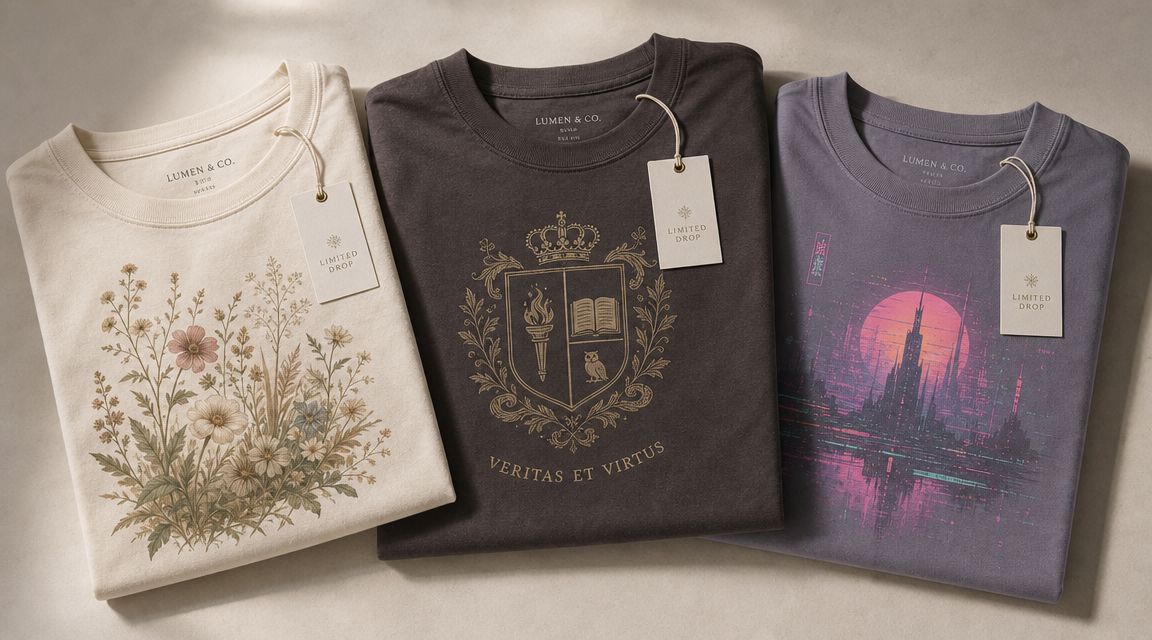
Most generic merchandise design ideas stop at naming a trend. That's not enough. You need a repeatable drop structure.
One useful benchmark from Printify's print-on-demand statistics is that products with 1 to 2 design elements outperform more crowded approaches, and single-design-element products account for 56% of eligible sales. That's a strong reminder that trend merch works best when you simplify it.
For a fast-moving collection, build one layout and swap only a few variables:
That gives you speed without chaos. If a TikTok creator validates one variant, you can push the winning layout into a pre-order, then extend it into a mini collection instead of scrambling from zero.
The best trend merch doesn't predict culture perfectly. It reacts fast with a design system that can bend.
Tabletop players already think in visuals. They know their class, armor, color palette, backstory, and favorite dramatic pose. That's why custom RPG merch is such a good fit for AI-assisted design. A campaign can start as text prompts in starryai and turn into character posters, desk mats, dice bags, hoodies, notebook covers, and party art prints.
This niche is especially strong because people don't just want one image. They want continuity. The rogue should look like they belong next to the cleric. The villain reveal should feel like it came from the same world. That's where an AI-native workflow helps more than a one-off commission model.
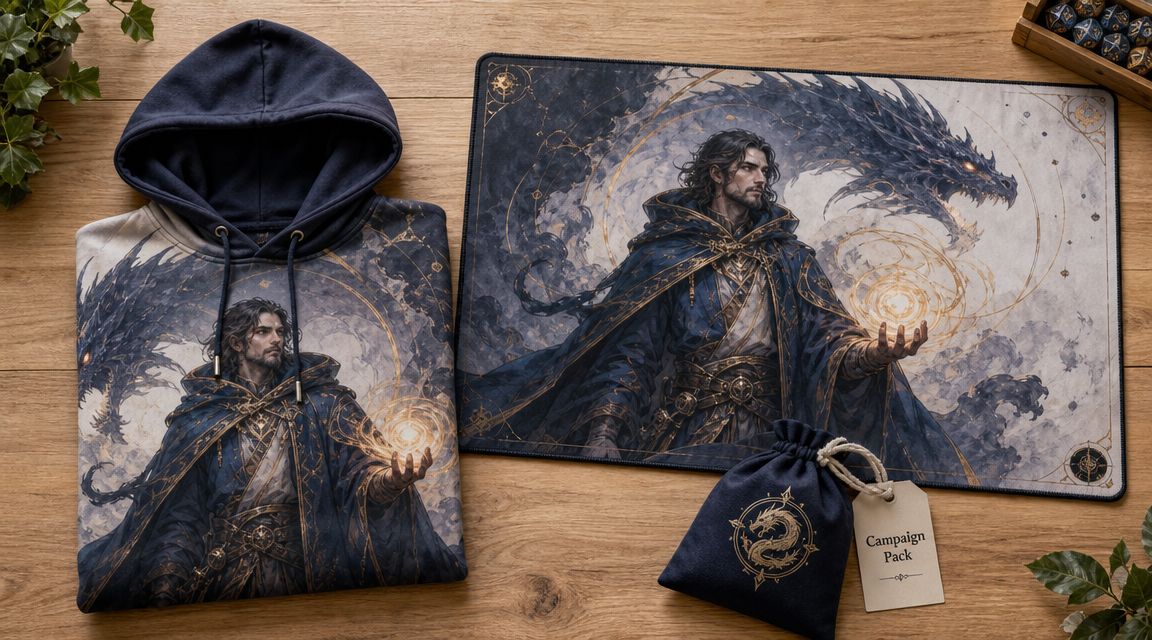
The trade-off here is between individuality and worldbuilding. If every character uses a radically different prompt style, the party pack looks messy. If every character is too uniform, nobody feels special.
A better structure:
One of the smartest ways to sell this is as a group offering. Don't market only to one player. Market to the whole campaign. Offer a set that includes one party banner image, one design per player, and a couple of low-cost companion items like dice bag art or stickers.
Reddit, Discord, Patreon communities, and Kickstarter-style campaign launches all fit this format naturally because the art isn't just decorative. It becomes part of the game culture around the table.
Authors already have the raw ingredients for merch. Characters, symbols, settings, mood boards, chapter moments, fictional maps, magical objects, recurring quotes. The mistake is stopping at the book cover.
A smarter merchandise design idea is to treat the cover as the center of a wider visual system. Use starryai to generate character studies, alternate scene art, symbolic motifs, and mood-driven layouts that extend into T-shirts, bookmarks, tote bags, mugs, collector prints, and launch-box extras.
This works best when the visual identity is tightly controlled. Fantasy authors can build sigils, magical relics, and house emblems. Romance authors can use phrase-driven apparel and stylized character silhouettes. Thriller authors can lean on minimal iconography, location maps, and sharp typographic covers.
One practical market signal matters here. Coherent Market Insights on the merchandise designing market notes that apparel is the largest product category, while North America accounts for over 30% of the global market and Europe over 25% in 2025, with demand shaped by customization and personalization. For authors, that means a good concept should stretch cleanly from apparel into patches, stickers, and accessories without needing a redesign.
A few bundle formats work particularly well:
If you're helping authors with this workflow, keep the world consistent first. Readers will forgive a simple shirt. They won't forgive a shirt that doesn't feel like the book.
Some of the strongest meme merch looks ridiculous at first glance and deliberate at second glance. That's the sweet spot. Emoji-driven AI art is great for this because it turns internet shorthand into a visual object. A weird emoji combination plus a tightly written prompt can produce absurd, hyper-specific imagery that feels native to online culture.
This is useful for campus groups, Discord communities, inside-joke merch, creator catchphrases, niche fandom side accounts, and fast seasonal drops. A string like "skull, sparkles, frog, office chair" can become a surreal graphic with the right art direction.
The common failure mode is randomness with no design discipline. Funny prompt in, chaotic image out, slapped on shirt. That rarely survives past one laugh.
Instead, build a frame around the joke:
Short-run micro-trends make this format especially useful. As noted earlier, consumer demand is pushing toward faster reaction and more individualized products, which is why modular meme drops can work so well. If one inside joke hits in a Discord or TikTok comment section, you can turn it into a test run quickly with starryai and see whether it deserves a full drop.
This isn't where you polish everything to perfection. It's where you move fast without making it look careless.
A lot of influencer merch fails because it starts from the catchphrase and stops there. Fans don't always want to wear a direct slogan. They often want the mood, the lore, the visual shorthand of the creator.
starryai is useful here because it helps translate a creator's personality into artwork. A beauty creator might lean into dreamy editorial portraits. A fitness creator might use bold, poster-like graphics. A chaotic comedy creator might build surreal mascot art from recurring jokes, emojis, or fan language.
The strongest creator merch usually falls into one of three lanes:
A practical advantage of AI-native creation is speed. If the creator has a weekly content rhythm, you can generate variants around the same layout and test them with polls, close-friends previews, or Patreon supporters before putting anything into production.
Don't ask only, "What should this creator sell?" Ask, "What visual language already belongs to their audience?"
Bundles work well here too. A shirt plus digital wallpaper set, hoodie plus poster, limited portrait print plus members-only colorway. Fans respond better when the merch feels like an extension of the creator's world, not a generic monetization step.
Gaming merch splits into two very different audiences. One wants performance-coded visuals. Sharp lines, jersey energy, faction emblems, clan identity. The other wants lifestyle merch. Stream persona art, mascot graphics, stylized avatars, and wearable fandom pieces that don't look like tournament gear.
The mistake is trying to serve both with one design. You usually need two tracks.
For streamers, esports orgs, and gaming creators using starryai, avatar-first merch is often the strongest entry point. Start with a custom visual identity for the on-screen persona, then adapt it by audience.
For example:
As noted earlier, modularity matters when you want a concept to travel across multiple products. A single avatar illustration can become a jersey mark, hoodie back print, desk mat graphic, and collectible poster if it's designed with clear silhouettes and limited clutter.
This category also rewards reveal moments. New season skin-inspired drops, tournament-week colorways, patch-themed visual refreshes. If the creator or team already has a content cadence, merch should follow it.
Corporate merch doesn't have to look corporate. In fact, the best employee merch usually doesn't. It should still follow brand rules, but it needs to feel wearable enough that people choose it outside the office.
AI helps here when marketing teams need fast concepting across campaigns, internal events, recruiting pushes, and client gifting. starryai can generate branded illustration directions, visual motifs, themed event graphics, and internal campaign art much faster than a blank-page process.
This is one category where constraints are useful. Set the visual system first, then generate inside it.
That usually means defining:
One major practical gap in merch content is legal and commercial safety. Apparel is one of the most targeted categories for IP enforcement in online marketplaces, and a discussion of trademark and copyright risk in merch ideas at OoShirts underscores why low-risk originality matters. For internal company merch, that means using owned slogans, custom illustrations, abstract motifs, and original brand assets instead of leaning on borrowed pop culture references.
Corporate teams often underestimate how much better merch gets when the design is original but restrained. The goal isn't louder. It's more wearable, more on-brand, and less disposable.
Fan merch has obvious demand and obvious risk. That's the trade-off. Communities want to celebrate the things they love, but marketplaces are aggressive about takedowns when artwork crosses into direct copying or trademark trouble.
So the strongest angle here isn't "make fan art faster." It's "make fandom-adjacent merch more original and safer to sell." That means mood-driven interpretation, archetype-based character design, symbolic references, alternate aesthetics, and original characters inspired by a fandom's emotional core rather than its protected specifics.
If you're building with starryai, think in layers. Instead of generating a recognizable character directly, generate:
That gives you something fans can read without triggering the most obvious enforcement problems. It also gives you more room to build a lasting shop rather than a shop built on borrowed recognition.
Fans often want the feeling of a universe more than a direct screenshot of it.
This is especially relevant for Etsy-style sellers and side hustlers. Shortcuts can get attention, but original visual interpretation is what gives you room to keep selling.
Most hybrid merch concepts fail when the physical product feels secondary. If the shirt only exists to point at the token, buyers treat it like packaging. That's backward.
The better approach is to make the physical item worth owning first, then use the digital collectible as a layer of access, provenance, or community identity. starryai fits this well because it can generate families of related-but-distinct visuals for limited drops, alternate covers, and collector tiers.
A creator collective might release a small run of character posters tied to digital ownership. A gaming brand might pair a physical hoodie with a collectible avatar card. An art project might issue one AI-generated motif across a numbered apparel drop and a digital certificate.
If you're exploring this lane, keep the structure simple:
This lead-in video shows the kind of hybrid thinking creators are experimenting with:
After that, the visual side still needs discipline. Limited edition doesn't fix bad composition. Keep the art readable, make the edition feel intentional, and don't rely on technical novelty to do the design work for you.
| Item | Implementation Complexity 🔄 | Resource Requirements ⚡ | Expected Outcomes 📊 / Quality ⭐ | Ideal Use Cases 💡 | Key Advantages ⭐ |
|---|---|---|---|---|---|
| AI-Generated Portrait Merchandise (T-shirts, Hoodies, Prints) | 🔄🔄, moderate (POD integration, image cleanup) | ⚡⚡, low–moderate (images + POD fees) | 📊 High shareability; personalized sales. ⭐⭐⭐ | Etsy sellers, influencers, gifting | Truly personalized products; viral social potential |
| Viral Aesthetic Merchandise (Seasonal & Trending) | 🔄🔄, needs rapid ops & trend monitoring | ⚡⚡⚡, fast turnaround, possible inventory | 📊 High short-term spikes; volatile longevity. ⭐⭐ | Trend-hoppers, Gen Z-focused indie brands | First-mover advantage; low design labor via AI |
| Custom D&D / Tabletop RPG Character Merch | 🔄🔄, prompt refinement & group coordination | ⚡⚡, moderate (custom prints, multiple SKUs) | 📊 Steady repeat purchases; high LTV per fan. ⭐⭐⭐ | RPG groups, Patreon creators, conventions | Passionate niche audience; collectible appeal |
| Book Cover & Author Merch Bundles | 🔄🔄🔄, industry standards & publication constraints | ⚡⚡, moderate (cover prep + merchandise) | 📊 Brand extension; supplemental revenue. ⭐⭐⭐ | Indie authors, series branding, BookTok | Cohesive author branding; cross-sell opportunities |
| Emoji & Text Prompt Meme Merchandise | 🔄, low (simple prompts, rapid iteration) | ⚡, very low (quick POD tests) | 📊 Very high virality potential; short shelf-life. ⭐⭐ | Meme communities, campus trends, TikTok creators | Minimal cost; high sharability and freshness |
| Personalized Social Media Influencer Merchandise | 🔄🔄, needs brand alignment and feedback loops | ⚡⚡, low–moderate (fanbase fulfillment) | 📊 High conversion from engaged followers. ⭐⭐⭐ | Micro-influencers, Twitch/TikTok creators | Strong creator-fan monetization; repeat buyers |
| Gaming Avatar & Esports Merch Lines | 🔄🔄🔄, pro quality & IP alignment required | ⚡⚡⚡, higher (branding, multi-SKU production) | 📊 High revenue potential; professional expectations. ⭐⭐⭐ | Esports teams, streamers, gaming brands | High-spending audience; international reach |
| Corporate & Brand-Aligned Employee Merch | 🔄🔄, needs brand governance & approvals | ⚡⚡⚡, scalable bulk production workflows | 📊 Boosts employee engagement and campaign visibility. ⭐⭐ | Marketing teams, corporate events, swag programs | Fast, consistent brand-scaled merchandise |
| Fan Art & Fan-Created Character Merchandise | 🔄🔄, creative prompts but legal considerations | ⚡⚡, low–moderate (POD + community production) | 📊 Strong niche demand; legal/IP risks limit scale. ⭐⭐ | Fandoms, conventions, fan artists | Deeply engaged communities; niche repeat buyers |
| NFT & Digital Collectible Integration Merch | 🔄🔄🔄, blockchain + physical fulfillment complexity | ⚡⚡⚡, high (minting, wallets, logistics) | 📊 Potential for secondary market revenue; volatile. ⭐⭐ | Web3 communities, tech-forward brands, collectors | Provenance/authenticity; exclusivity and resale potential |
The barrier between concept and product is lower than it's ever been. That's a key shift behind modern merchandise design ideas. You no longer need to wait for a perfect brief, a full creative team, or a long production runway just to test whether an idea has legs. You can build a visual direction, stress-test variations, and shape a collection while the idea is still hot.
That doesn't mean every prompt deserves to become merch. The strongest creators still filter hard. They ask whether the concept is readable at a glance, whether it can stretch across more than one product, whether it fits the audience's identity, and whether it can survive basic commercial reality. That includes originality, print clarity, and product choice. AI speeds up the front end. It doesn't replace judgment.
It also helps to remember what usually works. Simpler focal points beat cluttered layouts. Flexible concepts beat single-product dead ends. Original assets beat risky borrowed references. Trend-aware systems beat one-off panic drops. If you build around those principles, AI becomes less of a novelty and more of a practical design partner.
For creators, indie brands, authors, gaming communities, and side hustlers, the biggest opportunity isn't just making one shirt. It's building repeatable visual systems. A portrait series that becomes apparel and posters. A fandom-inspired symbol set that turns into stickers and totes. A creator aesthetic that can update weekly without losing its identity. That kind of thinking compounds over time because each new drop gets easier to produce and easier for your audience to recognize.
If you're planning your next launch, it helps to think beyond isolated products and toward a broader branded merchandise strategy. The best merch doesn't just look good in a mockup. It fits into a brand world people want to join.
starryai can be one practical option in that process if you want to generate visuals from selfies, text prompts, or emojis and move quickly from concept to design experimentation. The advantage isn't speed alone. It's what you do with that speed. Test more. Refine harder. Launch the ideas that still look strong after the excitement wears off.
The next product that clicks with your audience may start with a joke, a vibe, a phrase, a character sheet, or a single rough prompt. That's enough. Build from there.
If you're ready to turn selfies, prompts, and niche ideas into sellable merch concepts, try starryai and start generating visuals you can adapt into shirts, prints, stickers, and more.


.svg)