

Written by Mo Kahn on
July 1, 2026


You're probably seeing the same pattern every week. A format blows up on TikTok or Reels, your feed fills with clones, and by the time you're ready to post your version, the moment is already gone.
That usually gets framed as bad luck. It isn't. Most creators don't fail because they can't come up with good ideas. They fail because their system is too slow, too generic, or too disconnected from what people share.
If you want to learn how to create viral content, stop treating virality like a lottery ticket. Treat it like a workflow. The creators who do this well spot trends early, package them with a strong emotional angle, edit for retention, and turn any breakout post into a repeatable format instead of a one-time spike.
A creator spends three days polishing a video, posts it into a trend that already peaked, and watches it stall. Another creator ships a simpler version the same afternoon, matches the mood of the feed, and gets the reach. That gap explains the new rules better than any theory. Virality now favors creators who can spot momentum, package an idea fast, and turn the response into a repeatable format.
The target has changed too. A viral post is useful, but a viral system is worth more. Short-form platforms reward speed, relevance, and clarity, which means the strongest creators are not waiting for one perfect idea. They are building a workflow that helps them publish while attention is still available, then convert that attention into future posts, subscriber growth, and a recognizable angle.
That shift changes the job. Content creation is no longer just a creative exercise. It is pattern recognition, positioning, editing judgment, and distribution discipline working together.
The best-performing post is often the one that fits the moment cleanly, not the one with the highest production cost. I have seen rough cuts outperform polished edits for one simple reason. They arrived while people still cared.
Tools make that speed easier now. Creators can generate visuals quickly, test multiple hooks, and adapt a format without a full production cycle. That does not replace judgment. It raises the value of judgment, because more people can produce fast, but fewer know what is worth producing.
Writers studying memetic strategies for marketers make a useful point here. Ideas spread when they are easy to recognize, easy to repeat, and tied to identity or emotion. That is why format matters as much as message on short-form platforms.
Creators who produce repeatable winners usually work from the same core system:
The last part is where long-term growth happens.
A one-off hit can inflate your numbers for a week and do almost nothing for the business behind the account. A repeatable system does more. It gives you a way to study what worked, strip out the luck, and reuse the parts that consistently earn attention. That is how creators avoid the one-hit wonder trap. They treat every strong post as a test case, not a trophy.
You save a trend on Tuesday, sketch your version on Wednesday, and finally post on Friday. By then, your feed is full of copies, the comments have turned from curiosity to fatigue, and your post lands as a late imitation. That is how creators end up chasing virality instead of building a system for it.
Passive trend research, scrolling, noticing a format, and planning to make a version later, is usually too slow. Strong creators treat trend research like sourcing. They look for signals early, decide fast, and only touch trends they can connect to a repeatable content pillar.
Start where patterns show up before they become crowded. TikTok Creative Center is useful for tracking rising sounds, hashtags, and creative formats by category. Instagram Reels also gives early clues through repeated editing patterns, recurring caption structures, and audio that starts showing up across adjacent niches.
The job is to identify the pattern under the post, not the post itself.
Ask:
Trend cycles on short-form platforms often burn out fast. In practice, that means the useful window is usually measured in days, not weeks. Speed matters, but judgment matters more. Posting quickly into the wrong trend trains your audience to expect random content. Posting quickly into the right trend helps you get reach without losing positioning.
Platform signals show what is moving. Search and community signals help you decide whether it is worth building on.
Google Trends is useful for checking whether a phrase, aesthetic, or meme-adjacent topic is expanding beyond your personal feed. If interest starts showing up in search, the topic may support more than one post. That matters if the goal is sustainable audience growth, not a single spike.
Community listening adds the missing context. Reddit threads, Discord servers, niche Facebook groups, and comment sections surface the language people use, what they are skeptical about, and which jokes or frustrations keep repeating. That gives you angles with built-in relevance.
Marketers can learn a lot from memetic strategies for marketers. The useful lesson is simple. Ideas spread faster when people recognize them quickly, can repeat them easily, and feel that sharing them says something about who they are.
A trend board keeps research from dying in your saved folder. Use a spreadsheet or notes app. What matters is logging the same inputs every time so you can compare trends and act before they peak.
| Signal | What to log | Why it matters |
|---|---|---|
| Platform trend | Sound, format, visual style | Shows what feels native to the feed |
| Search cue | Rising phrase or topic | Confirms whether interest is broadening |
| Community insight | Joke, complaint, repeated question | Reveals the angle people already care about |
| Your adaptation | Hook, niche spin, CTA | Turns research into a post you can actually publish |
I also recommend tagging each trend with one simple decision: quick test, build into a series, or ignore. That small step changes your process. You stop collecting trends and start filtering for trends that can bring in the right audience, give you more than one content idea, and fit the system you want to keep running.
A creator spends an hour finding the right trend, records a solid video, and posts it. Then the first line lands flat, retention drops, and the post dies before the algorithm gets enough watch data to test it wider. That failure usually starts in the opening, not the idea.
Hooks matter because they buy attention. Stories matter because they keep it long enough to earn shares, saves, and follows. If you want repeatable virality instead of one lucky spike, build both on purpose.
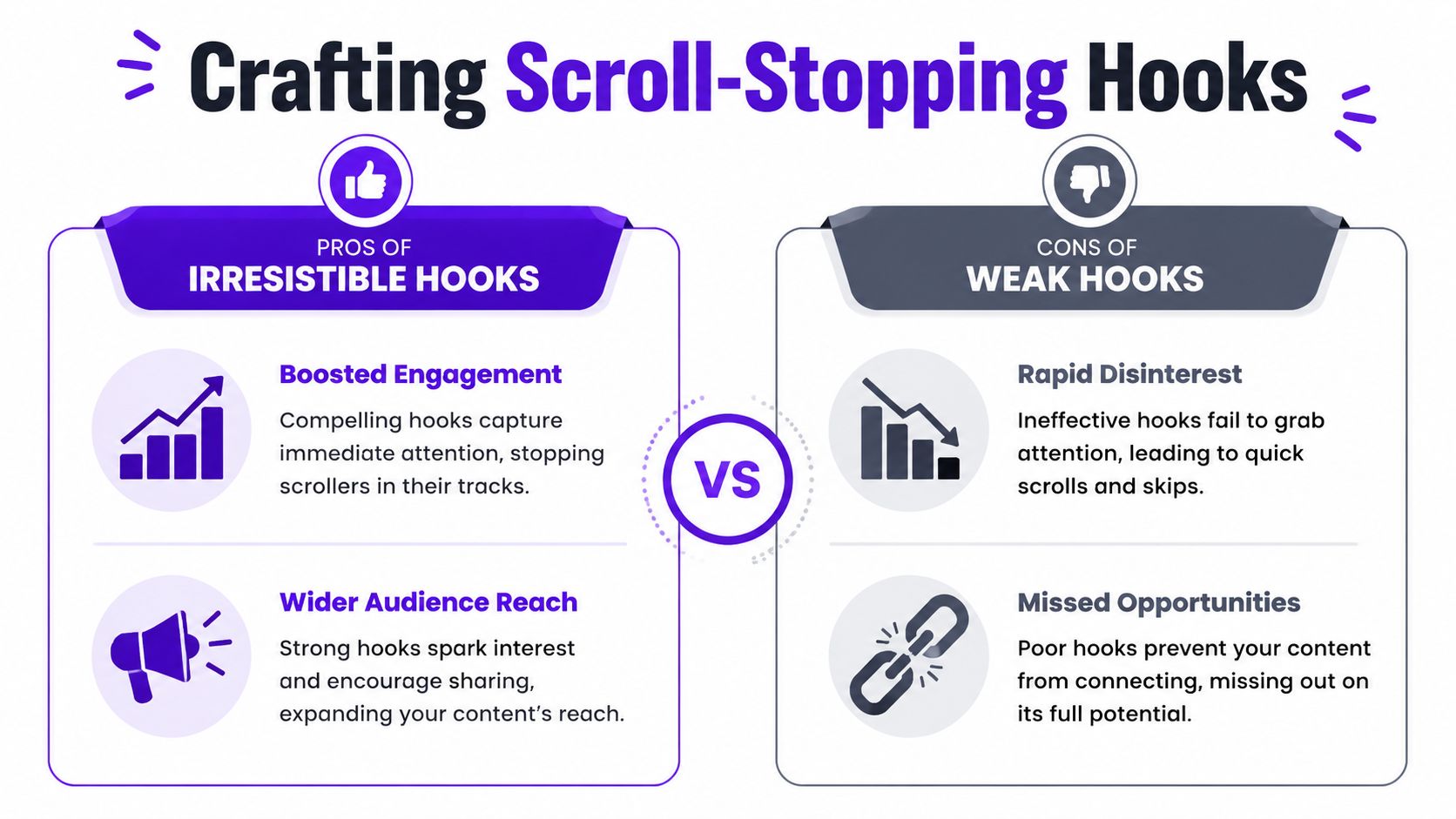
Analysts at Fractl reported that list posts, rankings, and comparisons earned especially strong pickup in its study on viral content, and the same analysis pointed to emotional intensity, surprise, and positivity as common traits in widely shared pieces, as explained in Fractl's study on what makes content go viral.
The practical takeaway is simple. A strong hook gives people a reason to care before they have time to swipe away. The best ones usually do one of four jobs fast: create tension, show contrast, promise a result, or challenge a bad assumption.
Compare these openings:
| Weak opening | Why it fails | Stronger opening | Why it works |
|---|---|---|---|
| “Here are some content tips” | Broad and forgettable | “Your videos aren't failing on quality. They're failing in the first 2 seconds.” | Names the problem and creates tension |
| “I tried an AI photo trend” | States the topic without a payoff | “I turned one selfie into three trend-ready looks people actually watched” | Promises a clear transformation |
| “My marketing advice” | No stake for the viewer | “The trend everyone copied last week already stopped performing” | Adds urgency and a real consequence |
Use these as starting points, then rewrite them in your own voice.
One rule improves almost every draft. Start with consequence, contrast, or change. Save the setup for after the viewer is already interested.
The hook gets the click. The story gets the distribution.
A simple structure works well because it matches how short-form content is consumed.
Problem
State the friction immediately.
Shift
Introduce the method, test, or creative decision.
Payoff
Show the result and explain why it worked.
That structure is easy to repeat across formats, which is the point. Viral content systems are built from reusable patterns. If a hook style gets attention and a story structure keeps retention high, you can apply that same framework to trends, tutorials, reactions, and product-led posts without starting from zero each time.
I also watch for one practical trade-off. A highly aggressive hook can spike views and bring in the wrong audience. A more specific hook often gets fewer raw impressions but better followers, better comments, and more durable series ideas. Choose based on the outcome you want.
If your post includes AI-generated visuals, the same rule applies. The visual reveal should support the narrative, not replace it. A quick before-and-after built with tools like starryai works best when the viewer understands what changed and why. If you need a fast primer before turning an image idea into a post, the starryai quick start guide for generating AI art is a useful reference.
People share content for social reasons. It makes them look informed, funny, early, or useful. Build for that, and you stop chasing isolated hits. You start creating posts that travel and pull the right audience into the next one.
Speed matters when a format is moving. If your workflow depends on a long editing chain, you'll miss more windows than you catch. That's where AI-assisted visuals become practical, not just flashy.
One useful option is starryai, which lets you turn selfies, prompts, and edits into stylized visuals quickly. For trend-driven creators, that matters because you can test an aesthetic while it's still relevant instead of waiting on a full manual design pass.
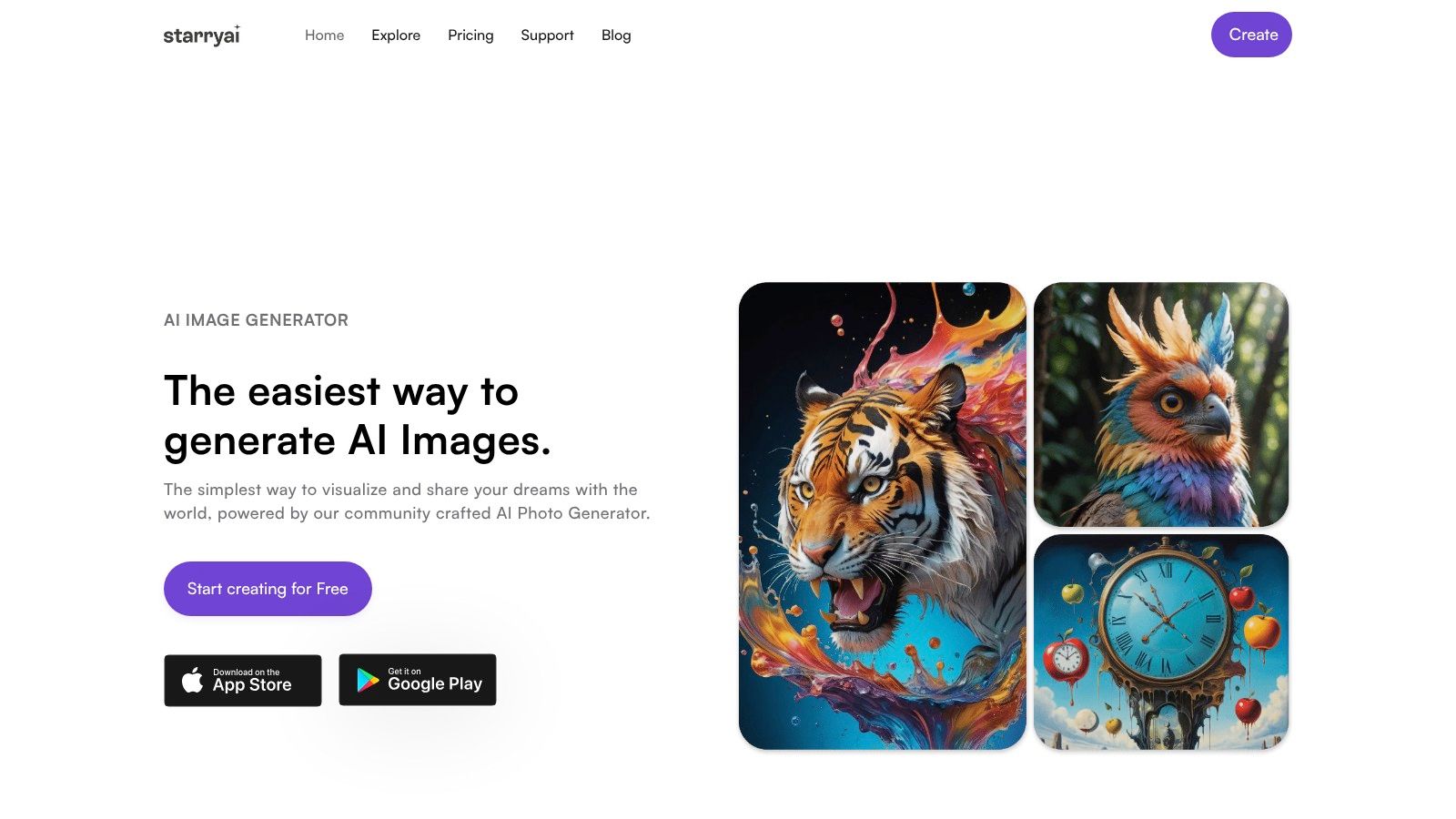
A practical use case is taking one selfie and turning it into several aesthetic directions so you can choose the one that fits the trend best.
Try this workflow:
Start with a clear base image
Use a selfie with simple lighting and a clean focal point. You want the face, pose, or subject to stay readable after transformation.
Choose one trend, not five
Pick a single direction such as cinematic portrait, retro photobooth, fantasy glow-up, or stylized streetwear look. Mixed prompts usually create muddy output.
Use the Edit feature instead of starting from scratch
Editing an existing image often preserves identity better than generating a brand new face or scene.
Generate variations
Don't treat the first result as final. The useful move is comparing multiple versions and selecting the one with the clearest silhouette, strongest mood, and most platform-native feel.
If you're new to the app, the quick start guide for using the starryai app covers the basic setup.
These aren't magic prompts. They're starting points.
Cinematic portrait
“Turn this selfie into a cinematic headshot, dramatic lighting, shallow depth of field, polished skin texture, moody color grading, editorial fashion feel”
90s photobooth look
“Transform this portrait into a 90s photobooth aesthetic, flash photography, slight grain, nostalgic color cast, casual cool styling, magazine snapshot energy”
Fantasy glow-up
“Edit this image into a dreamy fantasy portrait, glowing atmosphere, ethereal lighting, soft magical details, surreal but recognizable face”
AI visuals help most when they support a recognizable format. They hurt when they look mass-produced or disconnected from the creator behind the post.
A few judgment calls matter:
The creators who use AI well aren't replacing ideas. They're compressing production time so they can test more ideas while the trend still has oxygen.
A post can have the right trend, the right angle, and still stall because the edit asks for too much patience. The platforms are simple on this point. They test whether people keep watching. If the edit loses energy early, distribution usually shrinks before the idea gets a fair shot.
Editing decides whether a good concept becomes a repeatable win or another one-off spike.
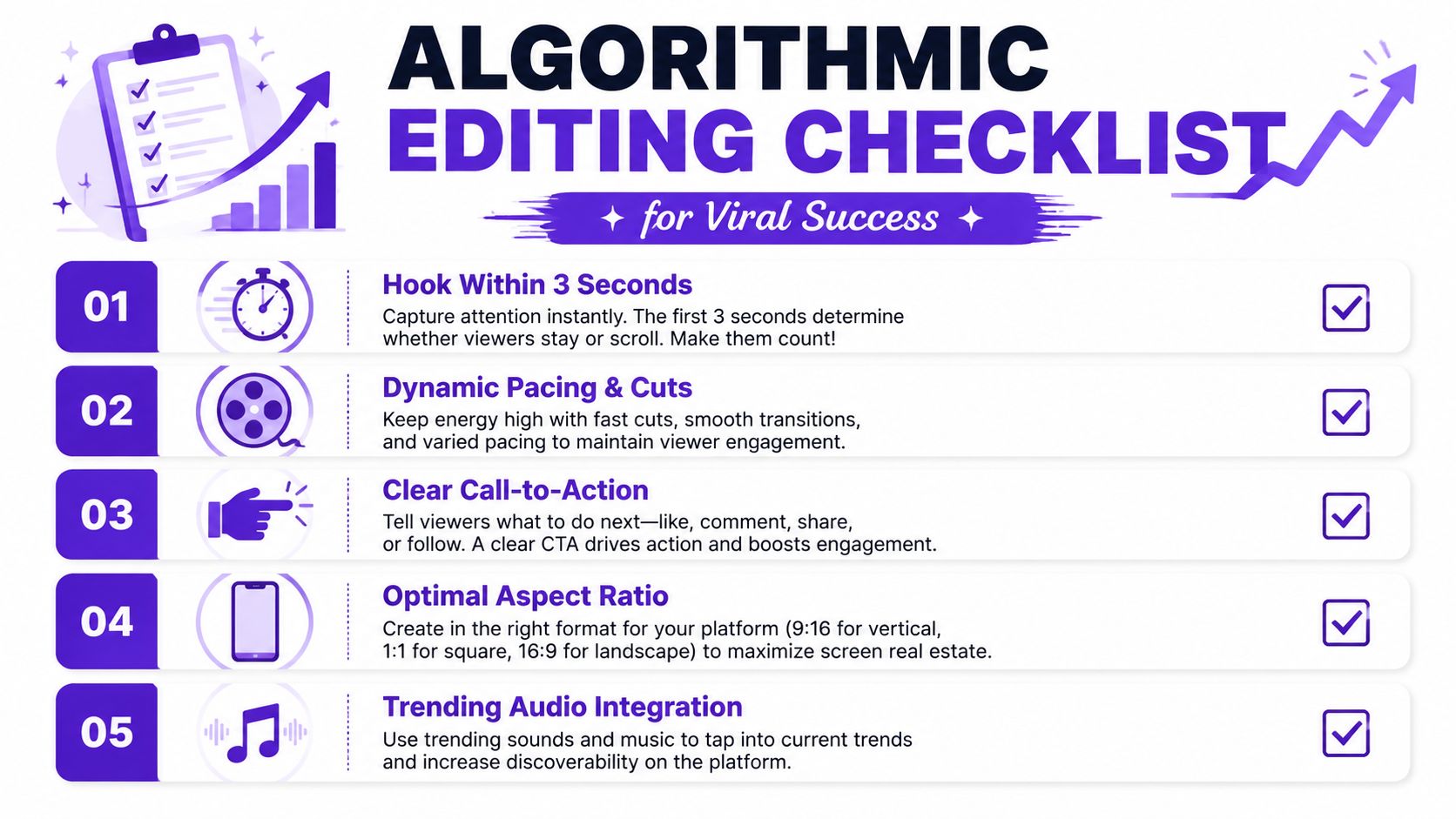
The edit should create progress the viewer can feel. New information, a reframed visual, a payoff, a clearer claim. If the screen and script sit in the same gear for too long, retention drops.
Meta's own guidance for Reels recommends keeping videos dynamic with quick pacing, movement, and changes in framing to hold attention and encourage completion, as noted in its creative guidance for Reels ads. The practical takeaway is straightforward. Give the viewer a fresh reason to stay before the current moment gets stale.
That does not mean stuffing every clip with effects. Overediting can hurt clarity, especially in educational or commentary formats. The goal is controlled momentum, not noise.
Use this before you publish:
For more platform-specific examples, this guide to video editing tips for social content is a useful companion.
A clean edit cannot rescue a weak idea. A sharp edit can give a strong idea enough retention to get tested properly.
That trade-off matters if the goal is repeatable virality. Chasing a flashy cut can get attention once. Building an editing system gets you more consistent reach because every post is designed to earn the next second, then the next one after that.
The strongest call to action usually fits the content format. A ranking video should invite disagreement. A transformation post should invite comparison. A hot take should invite a vote, not a vague “thoughts?” prompt.
Teams building that system can borrow from broader community management playbooks too. Carlos Alba Media shares proven engagement tactics for UK businesses that translate well to comment prompts, reply loops, and audience interaction on short-form platforms.
Edit for retention first, then polish. Distribution tends to follow.
You post a strong video at 2:17 p.m., check back that night, and wonder why it stalled. The edit was solid. The idea was proven. What failed was distribution.
Virality is often decided in the first wave of response. Platforms need early signals to know who should see a post next, so timing, caption strategy, hashtags, and follow-up distribution need to work together. Creators who want repeatable reach build that process on purpose instead of hoping a good post carries itself.
Post when your audience has a realistic chance of responding fast. That does not mean chasing generic “best time to post” charts. It means checking your own platform analytics, spotting when your followers are active, and publishing into those windows consistently enough to see a pattern.
Then stay with the post.
Reply to early comments. Share it to Stories if that platform supports it. Send it to a small circle of relevant people who already engage with your work. None of that can save a weak post, but it can help a strong post get the initial traction it needs to be tested wider.
Captions should do one job well. They should create a clear reason to respond.
Strong prompts are specific:
Hootsuite's review of social media engagement tactics recommends asking direct questions and using clear calls to action because they give people an easy next step to comment or reply, especially on short-form posts and interactive formats like Stories and Reels. See their guidance on social media engagement strategies.
Hashtags work best when they clarify what the post is, who it is for, and which conversation it belongs in. Repeating near-identical broad tags rarely adds much value. A tighter set gives the platform better context and keeps the post aligned with the audience you want to retain after the spike.
A practical mix looks like this:
| Layer | Purpose | Example style |
|---|---|---|
| Broad category | General discovery | Creator, marketing, beauty, books |
| Format-specific | Content type or trend frame | Transformation, before-and-after, POV |
| Niche-community | Audience fit | Indie author, BookTok, Etsy seller, RPG art |
The trade-off is simple. Broader tags can increase surface area, but narrower tags often improve audience match. For a repeatable system, audience match usually matters more than inflated impressions from people who will not return.
A post that earns saves, shares, or a dense comment thread has already told you something useful. The angle works. The framing works. The audience recognizes the value quickly.
Reuse that signal while it is fresh. Turn the post into a carousel. Pull a quote into a static graphic. Answer a comment with a follow-up video. Recut the opening for another platform. The goal is not to copy-paste the same asset everywhere. The goal is to extend a proven idea into multiple native formats so one good post becomes a small distribution system.
If you need extra visual variations for that process, this guide on using AI-created assets for social media shows practical ways to build supporting assets without starting from zero each time.
The creators who avoid the one-hit wonder trap usually do this well. They treat distribution as a repeatable operating system, not a final checkbox after editing.
A post breaks out on Friday. Follower count jumps, comments pile up, and the next week's content underperforms because it has nothing to do with the post that brought people in. That is how creators get trapped in a cycle of random spikes.
A repeatable viral system solves a different problem than a one-off hit. It helps you attract attention from new people, then give them a clear reason to stay for the next five posts, not just the next 24 hours.
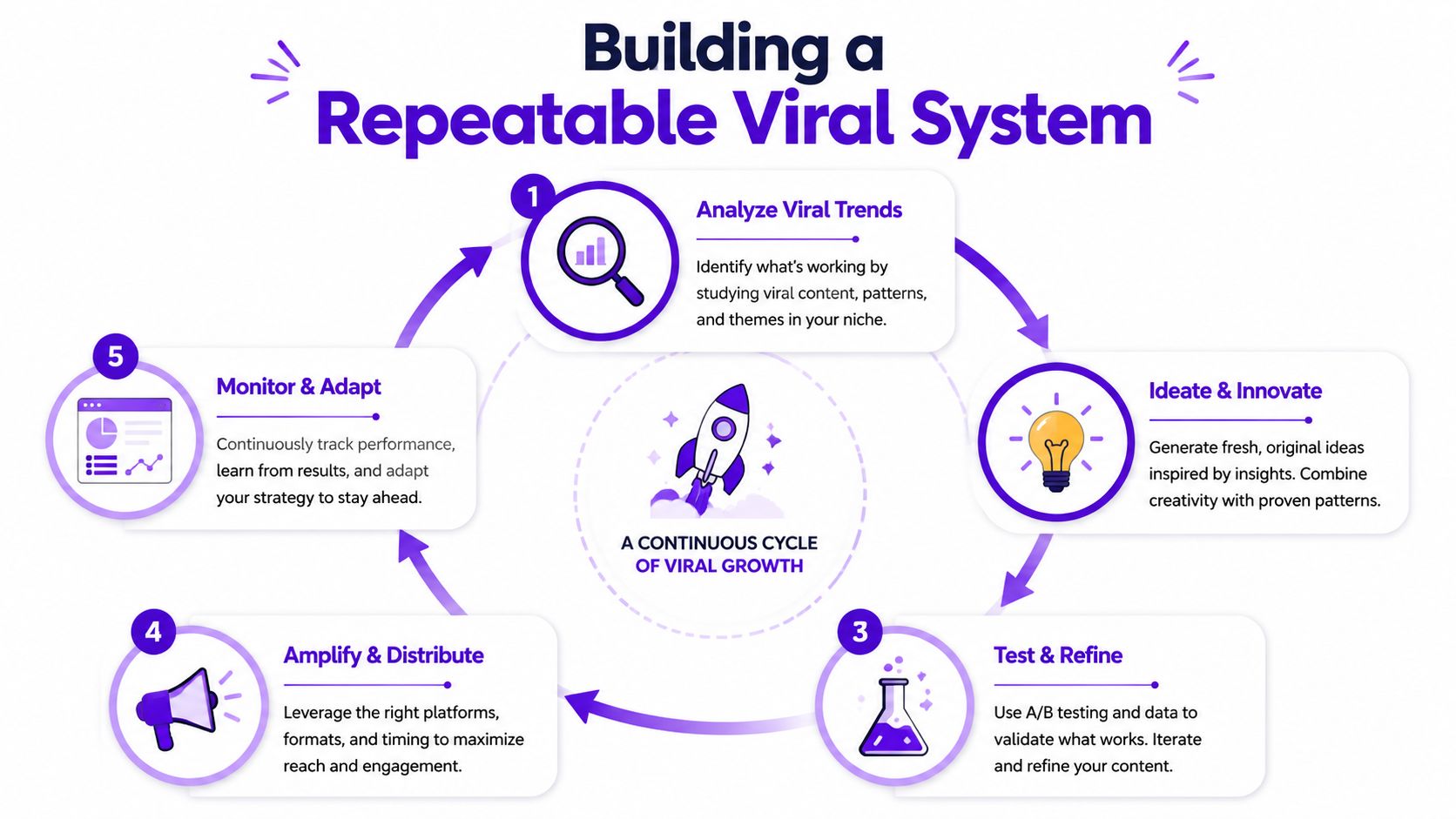
The failure point is usually not the viral post itself. It is what happens after it.
A trend can pull in viewers who care about the meme, the audio, the surprise reveal, or the format. If your next posts switch voice, topic, or audience promise, those viewers had no real path into your body of work. They sampled one piece of content, not your brand.
Pew Research Center has documented how platform use and creator behavior keep shifting across social apps, which is part of why borrowed attention is unstable unless creators give audiences a consistent reason to return: Pew Research Center social media research.
The practical fix is trend integration. Use the trend as packaging for a point of view you already own.
Examples:
The trend gets the click. The niche earns the follow.
When a post takes off, do not label it a win and move on. Pull it apart while the signal is fresh.
Look at four variables:
Hook
Did the first line create curiosity fast enough to hold cold viewers?
Subject
Did the topic carry natural shareability because it tapped identity, aspiration, status, or debate?
Format
Did the structure make the idea easier to consume, save, or repost?
Emotional response
Did viewers feel surprise, recognition, envy, relief, amusement, or urgency?
One post can win for several reasons at once. The mistake is changing everything in the next test. Keep the winning elements, swap one variable, and watch what holds.
The useful asset is not the post. It is the pattern you can repeat.
Creators who keep growing usually build a simple operating rhythm around their winners.
That last point matters most. Viral reach without audience fit creates noise. Viral reach with a clear content system creates compounding growth.
If you want to move faster on trend-driven visuals without building every asset by hand, starryai can help you turn selfies, prompts, and ideas into content-ready images quickly, which makes it easier to test formats while the moment is still relevant.


.svg)