

Written by Mo Kahn on
August 13, 2026


Can you really call an AI image “commercial use approved” if you have not checked where the inputs came from, who can reuse the output, and whether the same asset is allowed in another country or on another platform? That is the gap many creators miss. Commercial use rights form a chain, and every link matters.
Hearing commercial use often prompts the simple question, can I sell this? That sounds practical, but it's too blunt for real creative work. Licensing value depends on what you can do with an asset, where you can do it, how long you can do it, and whether someone else can take the same rights forward into another project.
That's why a bundle of rights is a better way to think about it. WIPO describes licensing as a commercialization route where the rights holder authorizes another party to exploit, make, have made, use, sell, copy, display, distribute, or modify IP in exchange for royalties, which means permission is made of separate actions, not a single yes or no. Industry guidance also stresses explicit definitions, geographic limits, time limits, and reporting obligations so nobody has to guess later what was allowed.
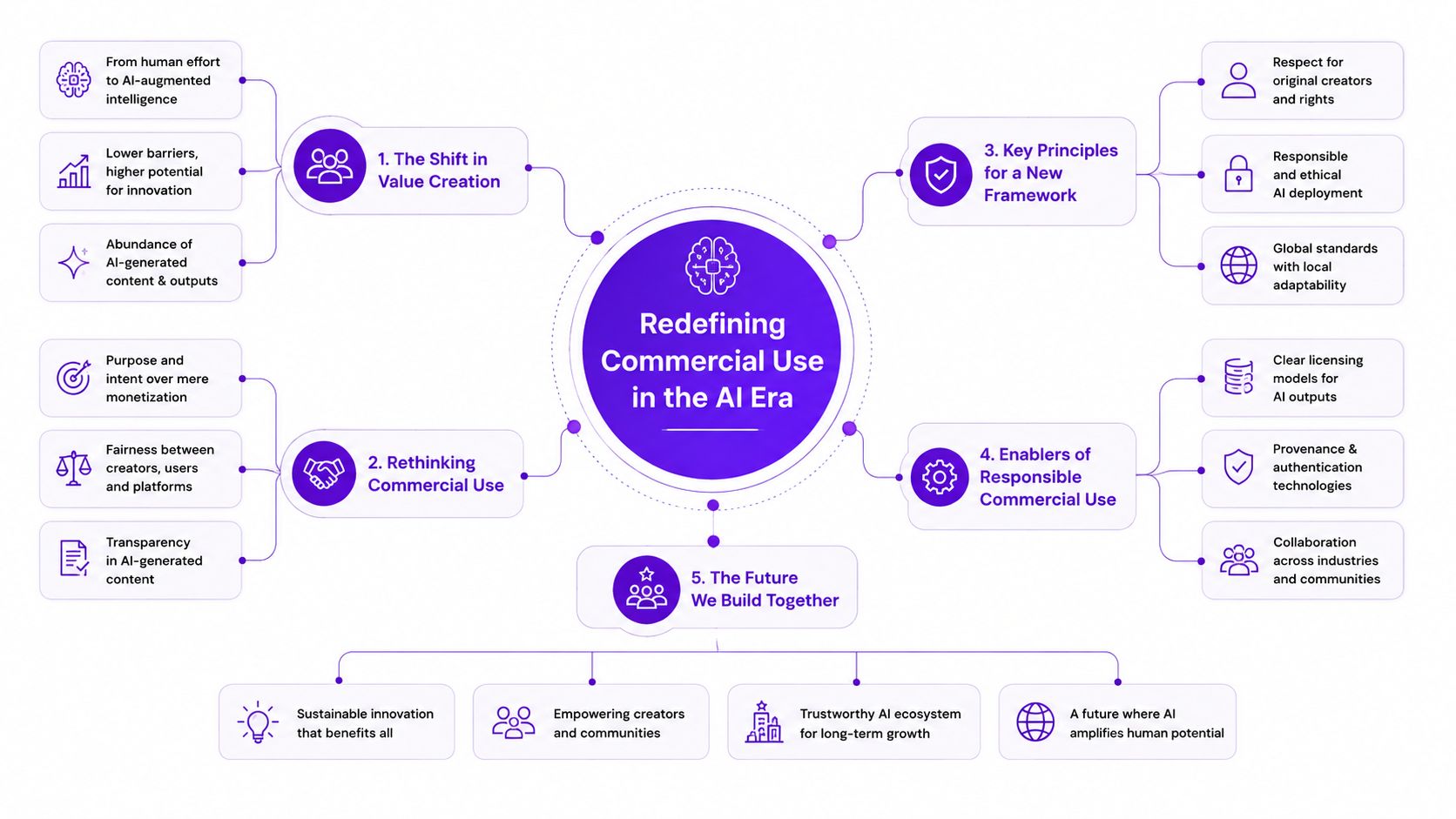
If you buy an image for a local merch drop, you may only need a narrow right to print and sell physical items. If you want to run a global ad campaign, that same image may need broader rights, including paid advertising, reuse across channels, and territory that doesn't stop at one country.
Practical rule: If the license doesn't say what you can do, where you can do it, and for how long, assume it's narrower than you need.
Government data frameworks use the same basic logic. Even there, scope is engineered through factors like use, access or transfer, commercial prospects, and funding source, which shows that commercial rights are usually built as a matrix of operational limits rather than one universal permission. For creators, that means the legal question is rarely “Can I monetize this at all?” It's usually “Which monetization paths are covered?”
Personal use is the easier lane to recognize. If you're sharing an image on a private profile, posting a moodboard, or keeping it in a portfolio that isn't being sold as a product or ad placement, you're usually in the realm of private or non-commercial use. The moment the image starts supporting revenue, promotion, or resale, the boundary begins to move.
Commercial use usually shows up in obvious places, such as Etsy listings, print-on-demand products, paid ads, and book covers. It can also show up in less obvious places, like a blog that carries ads or a portfolio designed to win paying clients. That's why “I'm not directly selling the image” doesn't always keep you in personal-use territory.
A simple way to test the line is to ask what the image is doing for you.
There's a useful gray area here. If a blog post earns ad revenue, or if your portfolio is built to attract freelance clients, the image is no longer just personal expression. It's part of a commercial workflow, which is why specific rights matter before publication.
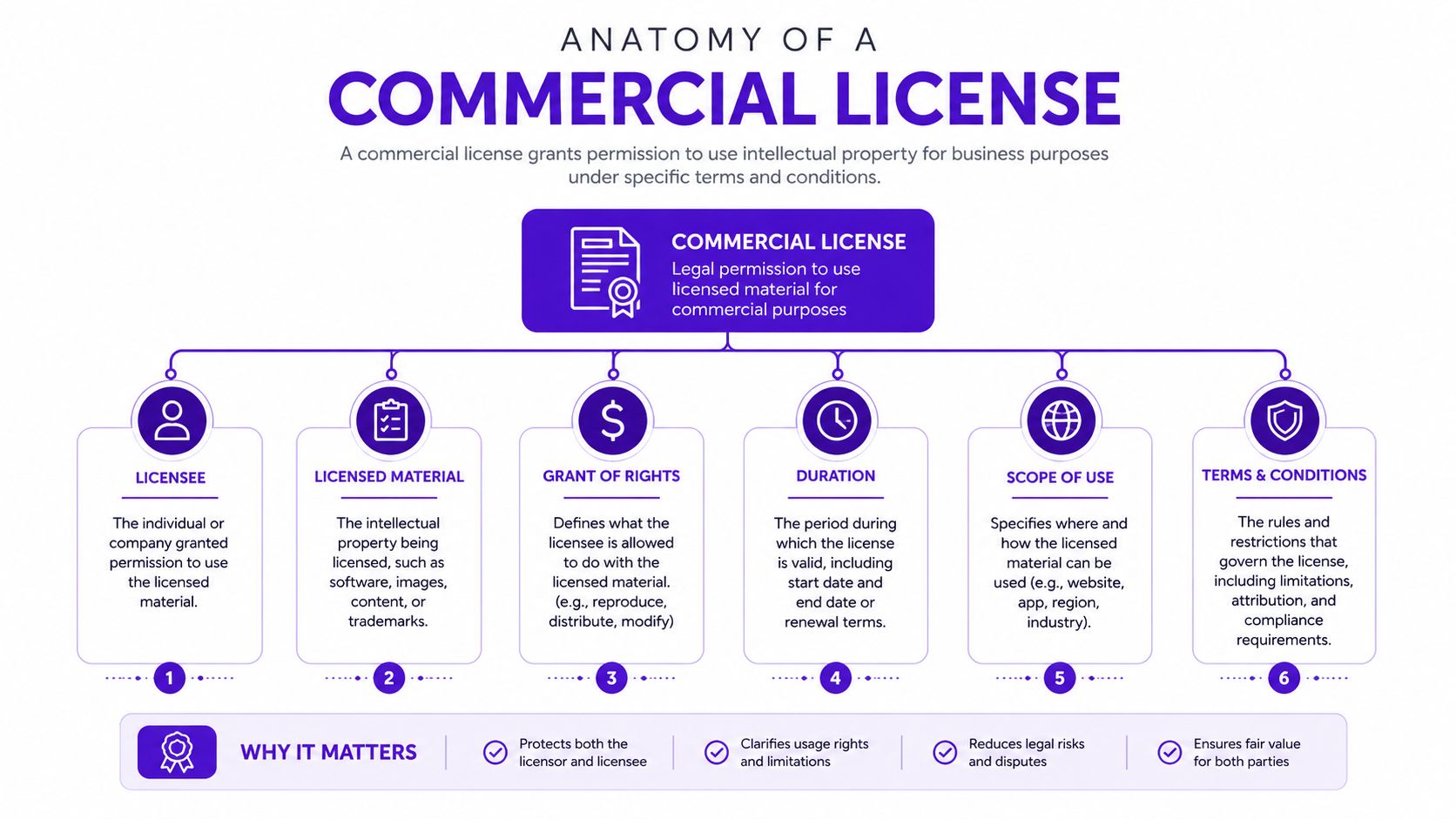
A commercial license only works when the terms answer the questions a creator will face in practice. A vague “commercial use allowed” line can still leave you exposed if it does not say whether the asset can appear in paid ads, be printed on merchandise, or be edited for a campaign. The details are the license, and the details are what define the chain of rights.
Platforms come first. A license might allow Instagram feed posts but not Stories, Reels, or physical products, and those are different uses because each one changes distribution and audience exposure. If you plan to move an image from a social post into a merch design or ad set, that permission needs to be written down.
Duration matters just as much. Some licenses are campaign-based, while others last longer, and the right to use an asset after the relationship ends should never be assumed. If the use is time-bound, know when the clock starts and ends.
Territory is another common trap. A license limited to North America can work fine for one campaign, but digital sellers often need wider rights because online distribution crosses borders fast. That is why worldwide rights can matter for creators who sell globally, and why cross-border consistency belongs in the same rights chain as the output itself.
Modification rights decide whether you can crop, recolor, overlay text, or create derivatives. Without that language, a simple design change can become a rights problem, especially if you are adapting the work for different markets or formats.
For a plain-English contract lens on how precise language protects both sides, the Miles Hansford Law Firm contracts guide is a useful reference point.
Good license language names the exact use, the exact platform, and the exact exit point.
Practical, but insufficient for real creative work. A strong license should also make the rights chain clear, starting with the inputs you used, then the output you created, then the places and formats where the work can travel without confusion.
Platform rights start with the license page, not the image export screen. On any AI generator, the first step is to find the commercial-use language, then check whether it changes by account type, subscription, or specific use case. If you can't point to the exact rule that covers your project, you don't yet have a clean chain of rights.
Start with the platform's own license terms and save the page as part of your records. On starryai, the relevant license information is available at starryai's license page, which is where you'd look for the written scope that governs use. You should also check whether the platform treats ownership and licensing as different concepts, because owning a file isn't the same as holding broad downstream rights to exploit it.
Then document the inputs. If you uploaded reference images, logos, or other material, make sure you had rights to use those inputs before generation. The practical rule is simple, the output license only helps if the whole production chain is clean.
Use this checklist every time:
If you're comparing platforms, the same habit applies whether you use starryai or another generator. You're not just collecting images, you're collecting evidence that the way you plan to use them fits the license you accepted. That record becomes part of your protection if questions come up later.
An Etsy seller making shirts with AI art has a different rights problem than an author designing a book cover. The shirt seller needs permission for product reproduction and resale, while the author needs the right to place the image on a commercial publication and possibly modify it to fit trim, title, and layout. A social media manager buying a design for a paid ad campaign needs yet another layer, because the image is now part of a promotional placement, not just a post.
The first case is a maker selling prints and shirts. If the artwork shows a recognizable person, there's a second issue beyond the license itself. Pond5's legal guidelines require a signed model release from every recognizable person and a signed property release when applicable, and they also require commercial content to avoid visible trademarks, company names, or logos. That's the kind of clearance work that turns a pretty image into something usable in commerce.
The second case is an indie author. A cover isn't just art, it's packaging for a book sold to readers. If the image includes borrowed references, stylized likenesses, or branded elements, the rights chain has to be clean before the cover ever goes to print or upload.
The third case is social promotion. A manager can't assume that a license for organic posting automatically covers paid placement. The difference between “shared on a feed” and “used in an ad set” is one of the most common places where creators overread their rights.
For creators who want a practical example of how image use gets translated into product decisions, Jessie's Home wall art collection is a useful reminder that artwork often moves from screen display into physical commercial spaces. And if you want a plain overview of monetization questions around AI art, starryai's own guide on can you sell AI-generated art is relevant background.
Here's the part many buyers never ask about. Even if a platform says you can use the output commercially, that doesn't automatically answer whether the inputs were legally clean. That's the chain of rights problem, and it sits at the center of AI art licensing.
The U.S. Copyright Office says fair use is case-specific, and that commercial use weighs against fair use but doesn't automatically defeat it. That matters because a commercial-use label can sound like a blanket shield when it's really only permission to use a particular output. It doesn't magically resolve questions about training data, reference images, or whether a specific use might still raise a copyright dispute.
Buyers get tripped up here. They ask, Can I sell this? when the harder question is, Can I prove the full chain of rights behind what I'm selling? If the image was influenced by copyrighted references, or if an uploaded source image lacked permission, the commercial label on the final asset may not protect the entire workflow.
A second complication is that rights disputes often focus on derivative use, market substitution, and whether the new work is sufficiently different from the original. Those are not the same as asking whether the file can be downloaded and posted. The legal risk lives upstream, in the materials and decisions that produced the final image.
A creator-friendly way to think about this is simple. The output license answers one question. The input clearance question asks whether every source in the chain can support the business use you have in mind. If the answer to either one is unclear, the asset is not ready for commercial deployment.
Before you hit publish or send files to print, verify the platform terms, confirm the right use category, and save proof of your license. If recognizable faces, logos, or private property appear anywhere in the image, check whether model or property releases are needed before the asset goes live. For a broader refresher on rights basics, why copyright matters for writers is a useful companion read.
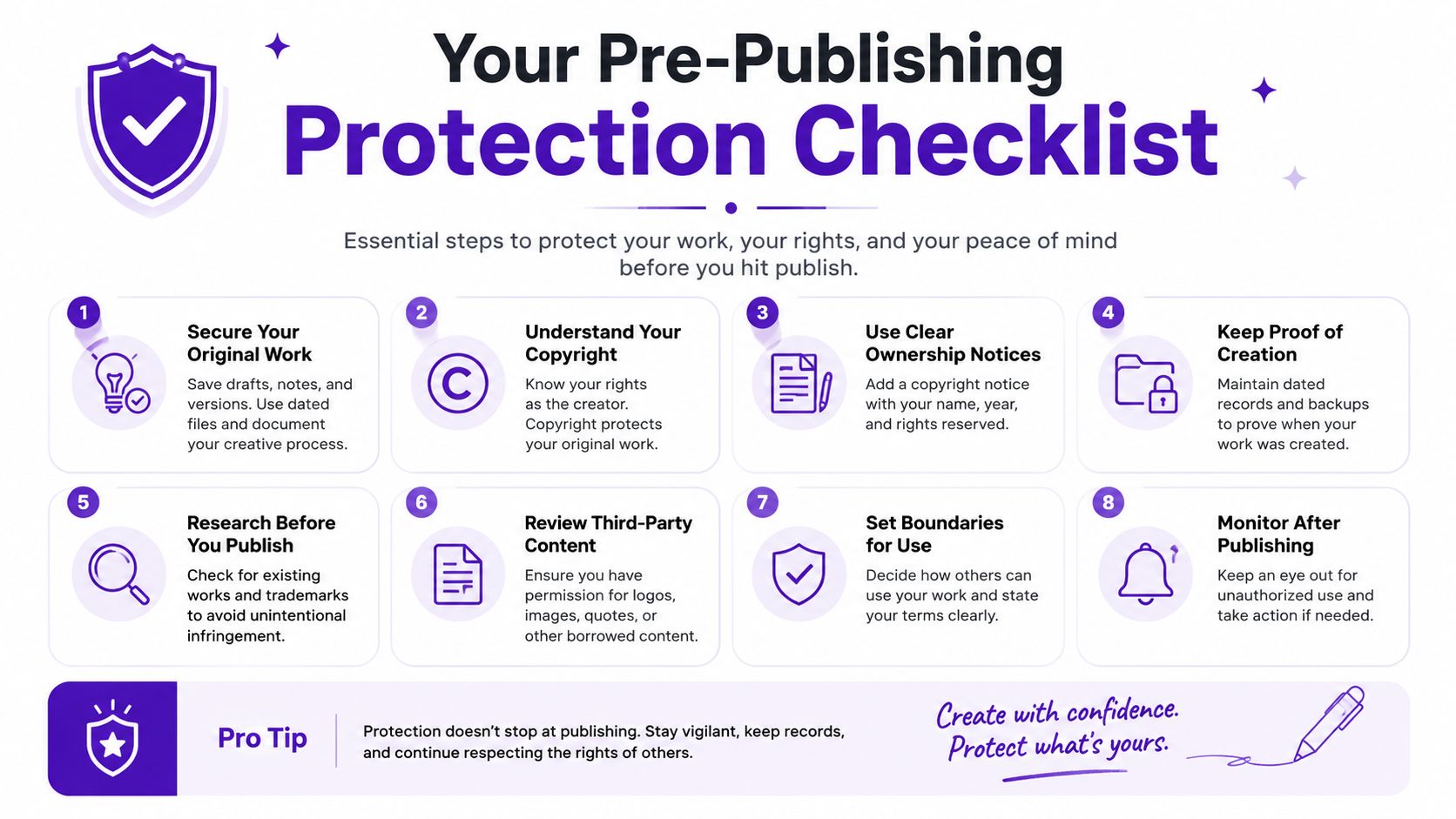
Keep a record of the generation process, including prompts, uploads, and any references used. If you sell internationally, remember that commercial-use expectations can shift across borders and platforms, so a use that feels ordinary in one market may need different permission logic in another.
For sharing workflows, starryai's sharing options can help you think through where an image might travel after creation. That matters because the farther an asset moves, the more important it becomes to know exactly what rights travel with it.
Save the proof now. Trying to reconstruct the chain later is always harder.
If you want a creator tool that helps you move from prompt to image quickly, starryai is built for that workflow and includes license information you can review before using generated art commercially. Visit starryai to check the current terms, then match your project to the rights you need before you publish or print.


.svg)