

Written by Mo Kahn on
July 1, 2026


You're probably doing what almost everyone does at first. You type something like “astronaut on a horse,” hit generate, and hope the model somehow reads your mind. Then the image comes back close-ish, but not usable. The pose is wrong, the mood is off, the framing is awkward, and it looks more like a random demo than something you'd post, print, or sell.
That gap usually isn't about the model. It's about the prompt.
Good AI image generator prompts aren't long streams of fancy adjectives. They work more like compact creative briefs. Harvard's guidance recommends building prompts from subject + style + details + format of output, and it specifically notes that more detail improves results in image generation through added context like lighting, color, background, realism, framing, and aspect ratio in the prompt itself Harvard's prompt formula for images. That's the shift most beginners miss. You're not tossing words into a box. You're directing a shot.
That matters whether you're making a viral TikTok selfie edit in starryai, character art for a fantasy series, or product-ready merch graphics for a print-on-demand shop. The strongest prompts don't just describe what the image is. They define what the image needs to do.
If you're turning selfies into shareable content, generic portrait prompts usually fail for one reason. They describe a person, but they don't describe a trend language.
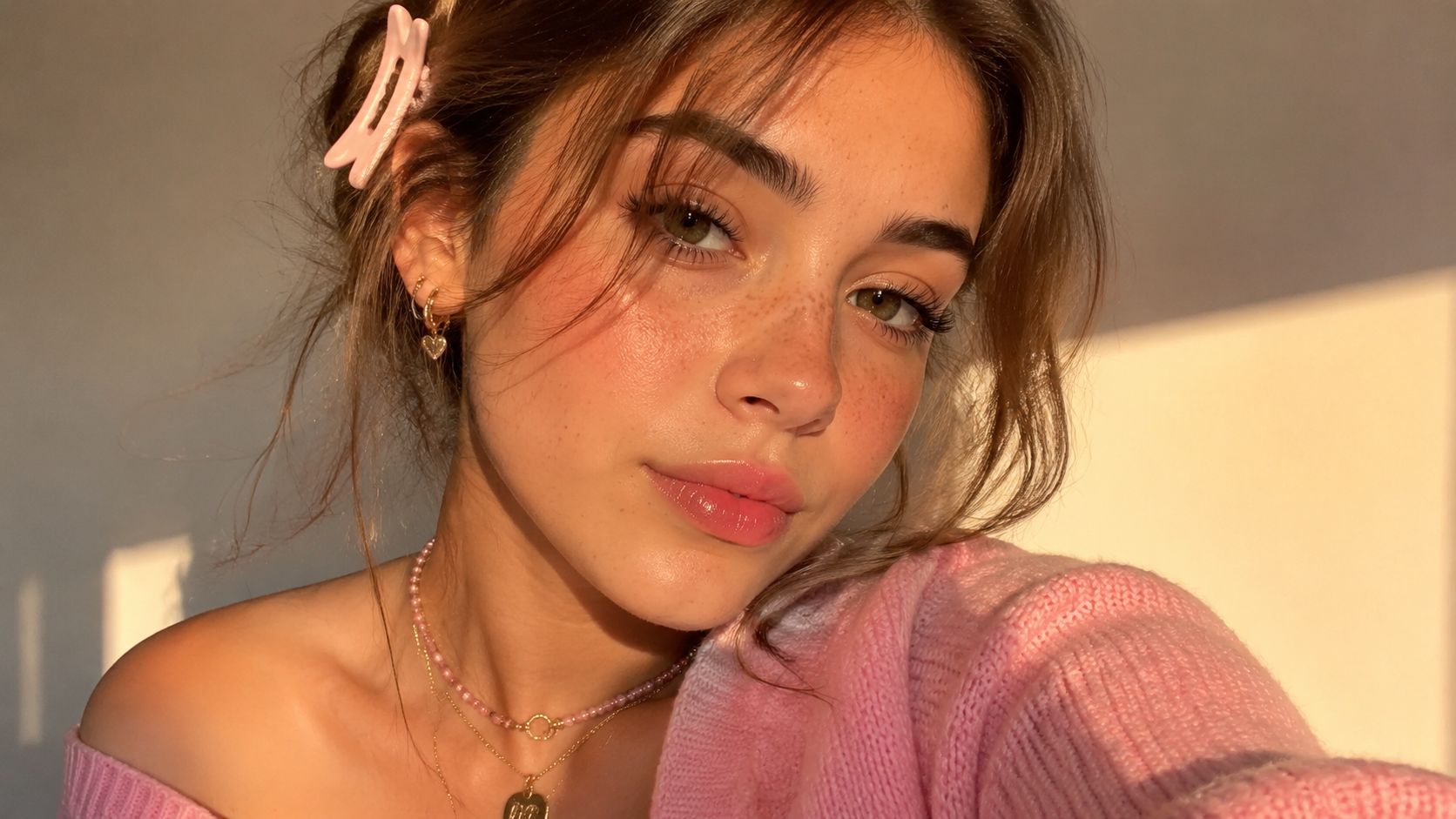
A strong TikTok prompt needs to combine identity, mood, camera feel, and current aesthetic cues. The practical move is to front-load the subject and vibe, then bring in style details after that. Prompt guidance around image generation increasingly emphasizes visual target, lighting, and composition, and prompt-order walkthroughs also point to the importance of leading with what matters most in the frame rather than treating prompts like flat word lists Google Cloud on detailed image prompts.
“Y2K fairycore selfie” works better than “pretty girl, pastel, aesthetic,” because it names a recognizable visual lane. Add the lighting and crop, and the image gets much easier to steer.
Try building from this structure:
Earlier prompt terms often carry more weight, so put the non-negotiables first.
Formula:[selfie subject], [trend aesthetic], [lighting], [color treatment], [camera angle or crop], [skin and texture preference], [background vibe], [vertical social format]
Example:close-up selfie of a girl with glossy lips and butterfly clips, Y2K fairycore aesthetic, golden hour lighting, warm pink and peach tones, soft-focus front camera look, dreamy skin texture, subtle sparkles and blurred garden background, vertical TikTok-style portrait
What works is specificity with a clear hierarchy. What doesn't work is dumping five aesthetics into one line and hoping they merge cleanly.
A useful test is to swap only one variable at a time. Keep the face and crop fixed. Change just the lighting from “golden hour” to “studio flash,” or just the aesthetic from “dark academia” to “coquette.” That gives you cleaner iterations and helps you learn what changed the image.
For a visual walkthrough, this kind of transformation prompt is easiest to understand in motion.
Book cover art falls apart when the prompt only names a character. Covers need narrative pressure, not just appearance.
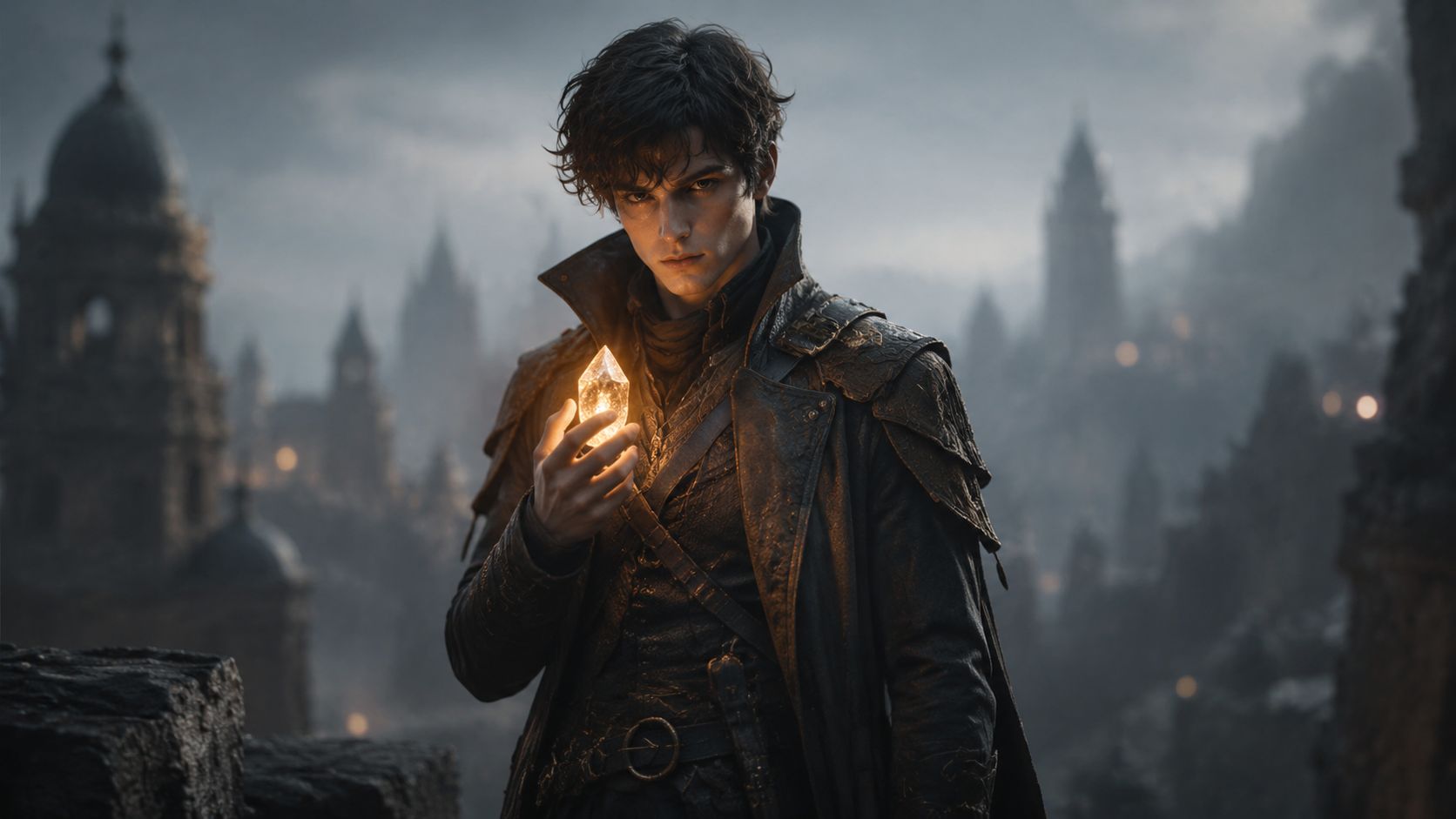
An indie fantasy author might know the hero has silver hair, a scar, and a cursed artifact. That's useful, but it still isn't art direction. The better prompt includes role, stakes, mood, wardrobe, magic language, and composition. If the image is for a cover, say so. If it's for character development, say that instead.
A fantasy prompt gets stronger when every detail does a job. Clothing signals worldbuilding. Lighting signals tone. Pose signals genre.
Better input stack:
Practical rule: Book-cover prompts should include both story mood and layout intent. “Fantasy mage” is a concept. “Portrait-oriented dark fantasy cover with space for title” is direction.
Formula:[character name or archetype], [age and appearance], [fantasy role], [signature clothing and object], [magic or world element], [mood], [art style], [cover composition]
Example:brooding young mage, pale skin, dark tousled hair, heir to a forbidden order, wearing a weathered black coat and rune-etched gloves, holding a glowing crystal shard, ruined gothic city in the background, mysterious and dark mood, detailed realistic fantasy illustration, portrait-oriented professional book cover composition
This is also where consistency matters. If you're generating a series, keep a locked prompt core for the protagonist and vary only setting, pose, and atmosphere between books. That's the easiest way to keep visual continuity.
If you're producing covers regularly, these workflows can help you streamline book cover creation with AI, and starryai also has a practical guide on creating book cover art in 6 steps.
Merch prompts should be built backwards from the product. A shirt graphic isn't a poster. A sticker isn't a tote pattern. Most weak print-on-demand images fail because the prompt chases aesthetics before it handles format.
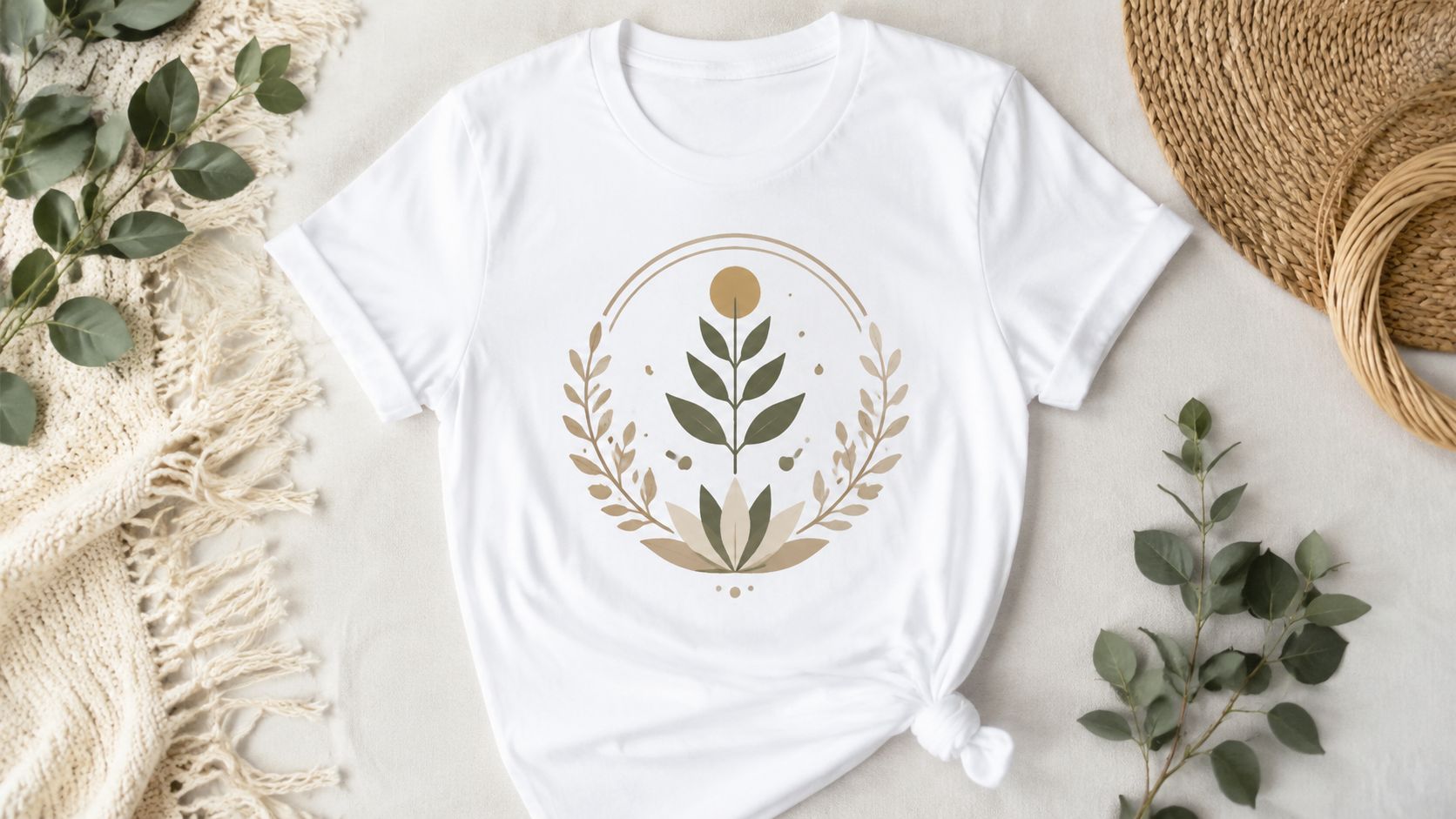
If you're designing for Etsy, Redbubble, or Shopify merch, the prompt needs to include composition constraints. Centered graphic, isolated background, limited color palette, and strong contrast often matter more than fancy rendering language.
A witchy botanical shirt print usually performs better as a bold graphic layout than a highly detailed painterly scene. The same idea can work for wall art, but the prompt should change with the canvas.
Use this logic:
Formula:[design subject], [commercial style], [composition for product], [color limitations], [background treatment], [print-readability instruction]
Example:minimal botanical sun and leaf illustration, modern vector-style graphic, centered square composition for t-shirt design, limited earthy color palette, clean white background, high contrast lines suitable for print-on-demand apparel
What works is reducing visual clutter. What doesn't work is asking for “hyper-detailed, ultra-realistic, cinematic” merch unless the product benefits from that complexity.
A fast iteration habit helps here. Generate one version for a white shirt and another for a dark shirt. Then test one cleaner option with fewer details than you think you need. Merch often gets stronger when you subtract. For creators building that workflow inside one tool, starryai has a guide on AI art for print-on-demand creators.
RPG art works when the image tells another player what kind of character they're looking at before anyone reads the sheet. If the prompt doesn't reveal class, temperament, and world flavor, the portrait won't feel playable.
A Discord avatar needs a different prompt than a full-body campaign illustration. For avatars, prioritize face, silhouette, and one iconic feature. For tabletop handouts or character sheets, add gear, pose, and costume storytelling.
A rogue shouldn't read like a generic fantasy model. A cleric shouldn't look like a wizard with a different color robe. Prompting needs visible class signals.
Try this format in practice:
Formula:[character name], [game or genre], [class or role], [personality], [distinctive gear or feature], [art style], [composition for platform]
Example:Nyx Varlan, dark fantasy tabletop RPG rogue, sharp-witted and secretive, hooded leather armor with silver daggers and a faint magical aura, narrow smirk, detailed fantasy concept art, square-cropped head-and-shoulders avatar for Discord
The trade-off is simple. The more you push cinematic environment detail, the less control you often keep over small character markers. If your priority is recognizability, keep the background light and the focal point tight.
A good game-avatar prompt answers one question fast. Who is this in play?
Brand prompts shouldn't read like raw image prompts. They should read like mini brand briefs.
That's how marketing teams use them now. Typeface reports that more than 50% of marketers use AI to create images, and it notes that many teams run through 5–10 prompt variations before landing on the right result, which reflects how prompts are being handled as iterative creative assets rather than one-off requests Typeface on AI image prompts for marketing campaigns.
The mistake is writing a fresh prompt from scratch for every post. That creates visual drift. A better system is to lock the brand layer and swap only the campaign layer.
A reusable brand prompt usually includes:
Formula:[content subject], in [brand visual style], using [brand color palette], [setting or background], [composition for platform], [logo or text-space instruction], [mood]
Example:glass water bottle with sliced citrus, in a clean wellness-brand visual style, using sage green, cream, and muted gold, sunlit kitchen background, vertical social composition with negative space at top for headline, calm and premium mood
This formula is especially useful for social managers who need repeatability. Save one prompt for product launches, one for testimonials, one for educational carousels, and one for seasonal campaigns. The wording can stay compact if the constraints are clear.
As a general prompt framework, structured methods like REFINE are useful in business workflows because they force role, expectation, format, iteration, nuance, and examples into the process, which reduces ambiguity when a team is refining assets together Maze on the REFINE prompting framework.
Seasonal prompts work best when they capture atmosphere before decorations. “Christmas glam” is weaker than “winter evening portrait with warm golden lights, velvet textures, and festive red accents.”
That's because seasonality is a full visual environment. It's color temperature, wardrobe, props, weather cues, and emotional tone. If you skip those layers and just add a holiday object, the output looks pasted-on.
A Valentine's prompt shouldn't rely only on hearts and roses. A Halloween prompt shouldn't depend only on pumpkins and bats. Lead with the seasonal world first, then bring in the specific celebration.
Use these prompt ingredients:
Formula:[person or subject], [seasonal atmosphere], [holiday accent], [lighting], [palette], [fashion or styling], [social or portrait format]
Example:close-up beauty portrait, spring renewal atmosphere with soft florals and fresh air feeling, subtle blossom accents, diffused morning light, cool pastel palette, dewy makeup and flowing hair, vertical social portrait
What works is restraint. Two or three seasonal symbols are enough. What doesn't work is cramming every festive object into one image.
I'd also prompt earlier than the calendar suggests. Holiday visuals often need extra rounds because small details matter more. If the scarf, candlelight, makeup, and background all need to feel coherent, you'll want room to refine.
Emotion is where vague prompting gets exposed fast. If you type “sad character,” you'll usually get a stereotype. If you describe what the sadness looks like physically, the image gets far more believable.
Expression prompting depends on visible evidence. Eyes, brow tension, mouth shape, posture, hand placement, and even head angle all matter more than abstract labels.
Instead of naming only the feeling, translate it into behavior. “Determined” becomes lifted chin, focused gaze, squared shoulders. “Vulnerable” becomes softened eyes, guarded posture, slightly parted lips, uncertain hands.
A strong prompt can stack emotion like this:
Creative shortcut: Prompt the emotional moment, not just the emotional adjective.
Formula:[character type], [emotion], [facial details], [eye expression], [body language], [story context], [style and framing]
Example:young warrior, determined but exhausted, dirt-smudged face with a tight jaw and faint frown, intense eyes showing resilience, upright posture with one hand gripping a cracked sword, moments after surviving battle, cinematic portrait illustration
The trade-off here is subtlety versus readability. For social content or thumbnails, stronger emotion reads better. For narrative art, softer expression often feels more human.
If you want more nuance, reduce extra costume details and give the face more room in the prompt. Emotional clarity usually improves when the image has less decorative competition.
Mashup prompts go wrong when both styles are treated as equal at every level. That usually creates visual conflict instead of fusion.
The fix is to choose a dominant style and a secondary influence. You're not blending two paint buckets. You're assigning roles. One style controls structure. The other style controls accent, palette, texture, or atmosphere.
“Renaissance + cyberpunk” is too broad on its own. “Renaissance portrait composition with cyberpunk neon accents” is controllable. The first is a collision. The second is direction.
Use this hierarchy:
Formula:[subject], [primary art movement or style], with [secondary style influence], [blend instruction], [lighting or texture notes], [composition]
Example:regal female portrait, classical Renaissance oil painting style, with cyberpunk neon city influence, harmonious fusion with strong Renaissance composition and subtle futuristic lighting, rich brush texture and glowing magenta-blue accents, formal bust portrait
When you want to push this further, style transfer tools help because they let you start from an existing visual base instead of prompting the fusion from zero. starryai offers a dedicated AI style transfer workflow that fits that approach.
One practical warning. If you combine too many famous movements, the image often loses subject clarity. Two is usually enough. Three can work, but only if one is clearly ornamental.
A creator pulls a caption straight from TikTok comments, drops in 💋🖤📸, and gets four images that all point in different directions. The problem is not the emoji. The problem is that the model still has to guess the subject, style, and camera language.
Emoji work best as fast creative shorthand. They carry mood, genre cues, and internet-native references in very little space. For prompt writing, that makes them a strong starting signal, especially for social content, profile art, posters, or meme-driven visuals.
The catch is control. A model can read 🌊☀️🍊 as beach editorial, summer vacation snapshot, citrus product ad, or sunset wallpaper unless the text around it narrows the path.
The practical move is to treat emoji as the top layer of the brief, then translate them into visual instructions a model can render consistently.
Use this stack:
That extra translation step is what turns a fun prompt into a reusable formula.
Formula:[emoji sequence], [plain-language interpretation], [subject], [mood], [lighting], [palette], [composition], [style/output goal]
Example:🧙♀️✨🌙 witchy night portrait, young woman with silver jewelry and dark waves, mysterious and elegant mood, candlelit low-key lighting, deep brown and muted gold palette, close-up portrait with soft background blur, cinematic fantasy character art
A few symbols usually perform better than a long chain. Three to five emoji give the model a clear signal. Past that, prompts often get noisy, especially if the symbols suggest conflicting settings or emotions.
I use emoji prompts most often at the ideation stage, then convert the winners into plain-language versions for production. That trade-off matters. Emoji are fast for capturing vibe. Plain text is better for repeatability, revisions, and team handoff.
Subculture prompts are where surface-level prompting gets obvious fast. If you ask for “cottagecore girl” without understanding the visual language, you often get a costume instead of an aesthetic.
Authentic niche prompts need symbols, textures, values, and environments that belong together. Dark academia isn't just brown clothes and books. Solarpunk isn't just green buildings. Goblincore isn't just mushrooms.
The strongest subculture prompts describe how the world feels, not just how it looks. Cottagecore often leans pastoral, handmade, soft, domestic, and seasonal. Dark academia tends to pull in scholarly spaces, old paper, shadows, ritual, and restraint.
Use this kind of stack:
Formula:[subject], [subculture aesthetic], [authentic symbols and fashion], [environment], [lighting], [tone], [framing]
Example:young woman reading by a rain-streaked window, dark academia aesthetic, oversized blazer, ink-stained fingers, stacked books and candlelight, old library interior, moody natural light, introspective portrait framing
Camera language matters a lot here too. Recent guidance around image prompting increasingly treats angle, framing, and aspect ratio as storytelling choices, with low angle often reading as authority, high angle as vulnerability, and wider framing creating more context for the world around the subject camera perspective walkthrough for image prompting.
If you're making transformation content, pick a perspective that matches the subculture. A high-angle cozy cottagecore shot gives softness. A straight-on dark academia portrait gives seriousness. A wider solarpunk scene gives worldbuilding.
| Prompt | Implementation Complexity 🔄 | Resource Requirements ⚡ | Expected Outcomes 📊⭐ | Ideal Use Cases 💡 | Key Advantages ⭐ |
|---|---|---|---|---|---|
| Viral TikTok Aesthetic Transformation Prompt | Low, simple templates; frequent trend updates needed | Low, mobile-focused presets; minimal assets | High engagement and shareability; trend-dependent longevity 📊⭐ | TikTok creators, social media managers seeking viral moments | Fast viral-ready output; minimal prompt complexity |
| Fantasy Character & Book Cover Art Prompt | Moderate–High, detailed briefs and iterations required 🔄 | Moderate, high-res assets, composition guidance, licensing for covers ⚡ | Professional, cohesive character concepts and cover-ready art 📊⭐ | Indie authors, self-publishers, small presses | Cost-effective alternative to commissions; consistent visual narrative |
| Commercial Merch Design & Print-on-Demand Prompt | Moderate, must account for print constraints and repeatability | Moderate, print-ready formats, color checks, mockups ⚡ | Scalable inventory-ready designs; may need color adjustment for print 📊 | Etsy sellers, POD entrepreneurs, merch designers | Rapid iteration for A/B testing; scalable and commerce-focused |
| Gaming Avatar & Tabletop RPG Character Prompt | Low–Moderate, specify game style and format variations | Low, avatar/headshot to full-body assets, platform specs | Personalized, platform-optimized avatars; multiple iterations often needed ⭐📊 | Gamers, tabletop RPG players, streamers | Fast personalized character generation across platforms |
| Brand-Consistent Social Media Visual Prompt | Moderate, one-time brand setup; strict constraints thereafter 🔄 | Moderate, brand assets, color hexes, templates, guidelines ⚡ | Consistent on-brand assets at scale; lowers creative variance 📊⭐ | Social media managers, marketing teams, brand managers | Ensures brand consistency; reduces content creation time/cost |
| Seasonal & Holiday-Specific Glow-Up Prompt | Low, time-sensitive tweaks; frequent seasonal updates | Low, seasonal palettes and themed assets; planning required ⚡ | High short-term engagement and commerce performance during windows 📊 | Retail marketers, seasonal business owners, creators | Captures peak seasonal interest; high short-term relevance |
| Emotion & Expression-Focused Character Prompt | Moderate, requires precise emotional vocabulary and iterations 🔄 | Moderate, detailed descriptors, reference expressions | Emotionally resonant and narrative-rich characters; subjective interpretation ⭐📊 | Narrative designers, character artists, game developers | Enhances character depth and storytelling; high relatability |
| Style Transfer & Cross-Genre Mashup Prompt | High, complex blending and clear artistic direction needed 🔄 | Moderate–High, style references, experimentation time, iterations | Highly unique, conversation-starting visuals; results can be unpredictable ⭐📊 | Experimental artists, concept designers, portfolio builders | Distinctive hybrids that stand out; encourages creative exploration |
| Emoji & Text-Based Visual Interpretation Prompt | Low, minimal input; ambiguous mapping risk | Very low, short emoji sequences and brief text inputs ⚡ | Fast, playful visuals optimized for social platforms; limited detail 📊 | TikTok-native creators, Gen Z audiences, quick-content makers | Extremely fast and minimal-input generation; platform-native language fit |
| Niche Aesthetic Subculture Transformation Prompt | Moderate, requires subculture research and sensitivity 🔄 | Moderate, authentic terminology, community references | Strong niche engagement and authenticity; smaller overall reach 📊 | Niche community creators, aesthetic enthusiasts, fashion-forward TikTokers | Deep community resonance and loyalty; authentic subculture representation |
The easiest way to improve your results is to stop thinking in terms of “good prompts” and start thinking in terms of “useful formulas.” A good prompt for merch is not the same as a good prompt for a fantasy cover. A strong TikTok transformation prompt is not the same as a strong brand-social prompt. When you separate those use cases, prompting gets much easier because each image has a job.
That's why the formulas in this guide matter. They turn prompting into a repeatable creative system. You don't have to guess your way through every new image. You can start from a reliable structure, then swap in different subjects, moods, styles, and output formats based on what you need.
A practical habit helps more than any single trick. Keep a small prompt library. Save your best prompt for one selfie transformation, one merch design, one character portrait, one cover concept, and one branded post. Then duplicate and edit from those templates instead of starting with a blank text box every time.
Prompt order also matters more than many beginners realize. Lead with the subject, the use case, and the emotional or visual priority. If the crop matters, say it early. If the image is for a shirt print, say that early. If the mood is the whole point, make that impossible to miss. Style references are helpful, but they should support the core image, not replace it.
Iteration is part of the craft too. In marketing workflows, teams often test multiple versions before they settle on one direction, and that same mindset helps individual creators. Don't rewrite everything at once. Change one variable at a time. Keep the subject stable and test angle. Keep the angle stable and test lighting. Keep the lighting stable and test palette. That's how you learn which words move the output.
Negative constraints can help as well, especially when the model keeps drifting into extra props, unwanted clutter, or the wrong mood. If you need a clean product visual, exclude busy backgrounds. If you need a readable avatar, exclude extreme wide shots. The strongest prompt often says what to avoid as clearly as it says what to include.
There's also a bigger shift happening underneath all this. Prompting has become accessible enough that non-specialists can get better results by adding clear descriptors and refining structure, rather than learning technical model behavior from scratch. That's good news for creators, authors, marketers, Etsy sellers, and anyone using tools like starryai to move from rough ideas to usable visuals quickly.
So use these formulas as starting points, not scripts. Borrow the structure. Replace the surface details. Test versions aggressively. Keep what works. Cut what doesn't. After a while, you won't just be writing prompts. You'll be building a visual language you can reuse across products, platforms, and creative projects.
If you want a simple place to practice these formulas, starryai gives you a way to generate images from text prompts, selfies, and emoji-based ideas, which makes it a practical option for testing viral aesthetic concepts, character art, and branded visual directions.


.svg)